Updated: September 16, 2026
Most of Ohio’s ghost stories start with something that really happened.
Lightning hit a stone tower in a Dayton park in 1967. The 1918 flu overwhelmed an Army camp outside Chillicothe and filled a theatre with bodies. The folklore grew up around facts like those, and in most cases you can still go stand where it started. These 15 Ohio urban legends run from a lake monster to poison-pen letters, and each entry says whether you can actually visit.
Bessie (Lake Erie Monster)
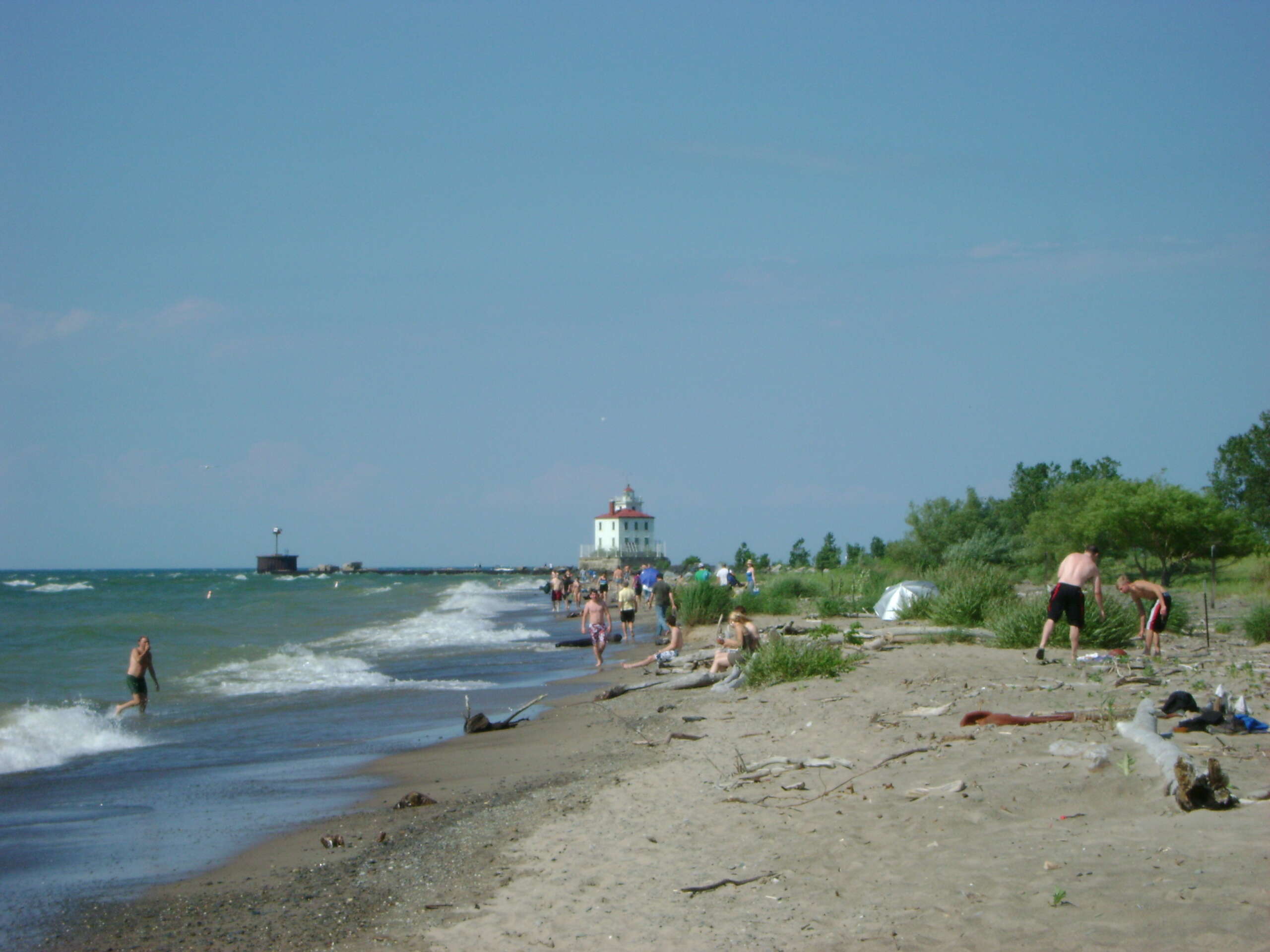
Lake Erie has its own monster story. Known as Bessie or South Bay Bessie, this lake monster has intrigued northeastern Ohio and Michigan for centuries. The earliest recorded sighting dates to 1793, when the captain of the sloop Felicity, out shooting ducks north of Sandusky, reported something more than sixteen feet long moving through the water. A wave of sightings followed in 1817, and the reports have never really stopped. Descriptions have settled into a shape: snake-like, 30 to 40 feet long, at least a foot thick, with a grayish cast to it.
Can you visit? The lake is all yours. Headlands Beach in Mentor and the shoreline around Marblehead are the classic vantage points. Bessie sightings are not included.
The Ghost of Lake Hope Furnace
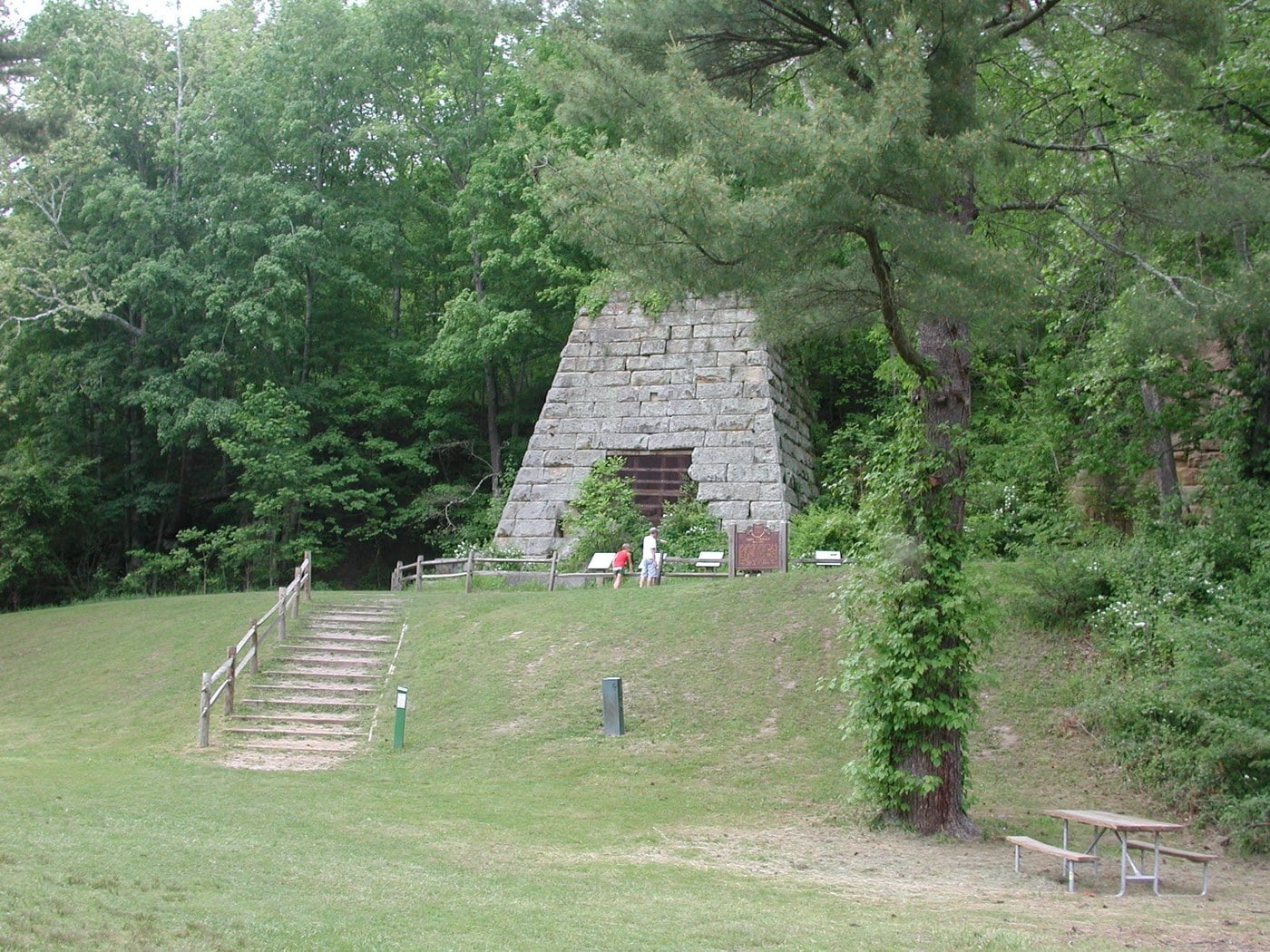
At Lake Hope State Park, the story only comes out on stormy nights. A watchman who once guarded the furnace is said to still walk the grounds with his lantern. The furnace itself ran from 1854 to 1874, pulling iron ore out of the sandstone that runs through this part of the state. The watchman is said to have died in a storm, and the story goes that he never stopped making his rounds.
Can you visit? Yes. The Hope Furnace ruins sit right along State Route 278 in Lake Hope State Park, free and open dawn to dusk. Details at ohiodnr.gov.
Mudhouse Mansion

Mudhouse Mansion in Lancaster was a source of chilling tales right up until the demolition crews arrived on September 21, 2015. Several ghost stories plagued the property while it stood. The most popular being that the home was the original location of the iconic Bloody Mary and that the house was haunted by a woman who killed her children.
Can you visit? No. The house came down in 2015 and the land is private property. People still drive out to Lancaster looking for it and there is nothing there.
Circleville Letter Writer

The letters started landing in Circleville mailboxes around 1976, aimed first at school bus driver Mary Gillispie. Eventually hundreds of residents got one, along with local businesses and government offices, and the contents threatened to drag out whatever the recipient least wanted known. In August 1977 Mary’s husband Ron left the house to confront the writer and died when his truck ran off the road. The coroner ruled it an accident. Plenty of people in town never accepted that. Six years later Mary found a booby-trapped pistol rigged to a sign on her bus route, and her brother-in-law Paul Freshour was convicted of attempted murder for it. The letters kept coming while he sat in prison, some of them while he was in solitary. They stopped after his release in 1994. Nobody was ever charged with writing them, and the local sheriff’s office has since closed the case.
Can you visit? Not really. This one is a paper trail rather than a place, and the houses that got the letters are people’s homes.
READ MORE: Small Town, Big Secrets: The Chilling Circleville Letter Mystery That Stunned Ohio
Moonville
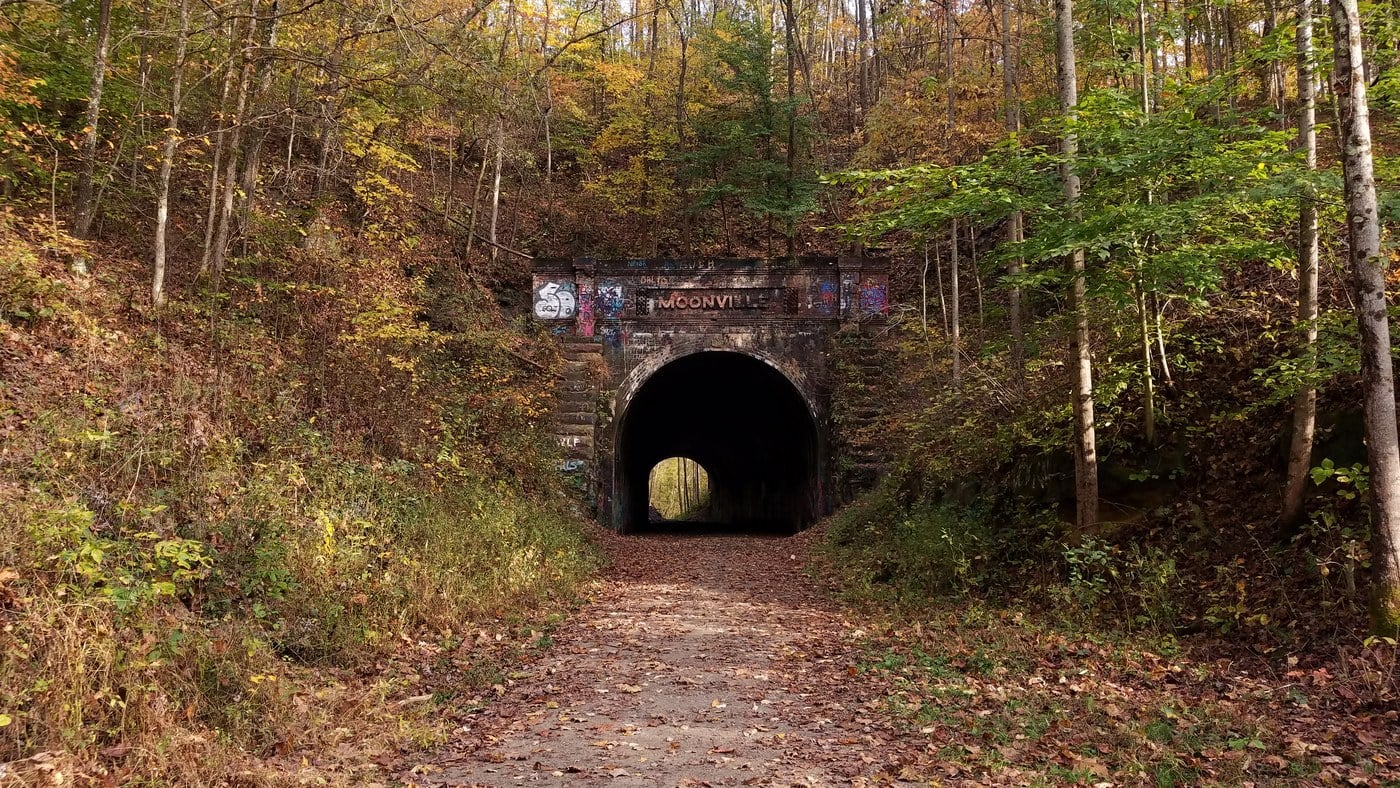
Moonville, an abandoned coal mining town, is known for the haunted Moonville Tunnel. This historic tunnel, surrounded by Ohio legends, is believed to be home to a ghostly figure who met a tragic end beneath its tracks. It’s a spooky setting and if you’re someone who doesn’t get scared too easily, you can visit the tunnel and explore for yourself.
Can you visit? Yes. The tunnel sits on the Moonville Rail Trail, free and open 6 a.m. to 11 p.m. daily, with parking at the trail lot on Hope-Moonville Road. The Vinton County Park District maintains about ten miles of trail out there.
READ MORE: Midnight At Moonville Is The Spookiest Festival In Ohio
Rogues’ Hollow

Rogues’ Hollow, often dubbed Ohio’s “Sleepy Hollow,” was a coal mining village notorious for outlaws and gangsters. The town’s eerie tales include a crying baby at night, ghost trains, and even Ohio’s own headless horseman.
Can you visit? Yes. Rogues’ Hollow is in Doylestown, up in Wayne County, and the road through the hollow and the Silver Creek bridge are public. The Chippewa-Rogues’ Hollow Historical Society opens its mill museum on a seasonal schedule, so check chippewarogueshollow.org before making the drive.
Witch’s Tower
The Lookout Tower in Hills and Dales Metro Park, often dubbed the “Witch’s Tower” or “Frankenstein’s Tower” has a dark history. In 1967, a lightning strike claimed the life of a teenager named Peggy Harmeson while she sought shelter in the tower during a storm. Since then, the tower has earned a certain reputation with visitors claiming to see a ghostly girl and boy whenever lightning illuminates the sky.
Can you visit? Yes, but only from the outside. The tower still stands in Hills & Dales MetroPark and the door has been sealed shut with concrete.
READ MORE: The Witch’s Tower: Dayton’s ‘Frankenstein’s Castle’ Legend
Ohio State Reformatory
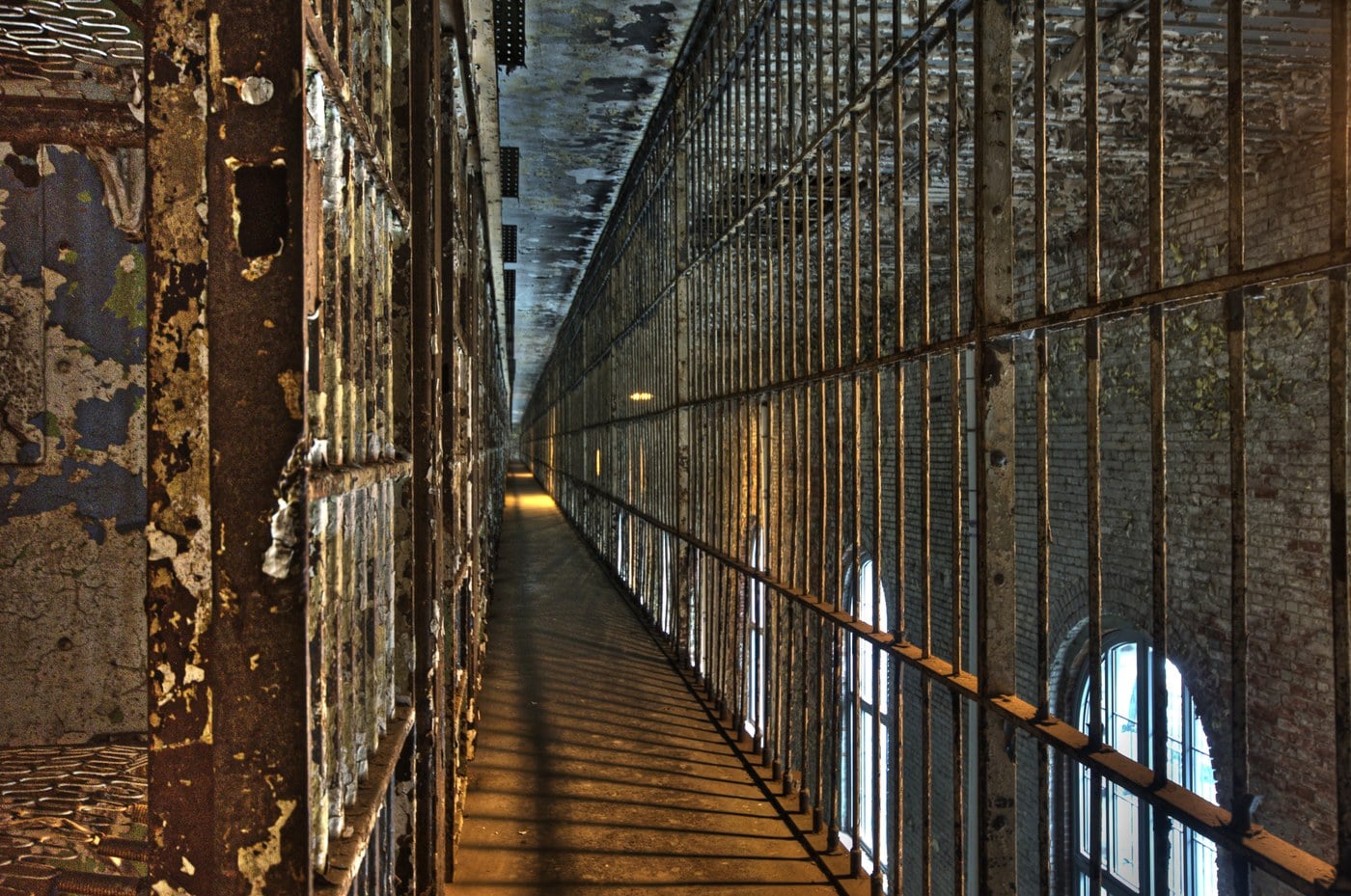
Known for its haunting beauty, the Ohio State Reformatory in Mansfield has been the backdrop for numerous movies and is famous for its paranormal activity. Visitors have reported eerie occurrences and ghostly sightings within its imposing walls. You can schedule your own ghost tour or even visit the prison’s haunted house.
Can you visit? Yes. Self-guided and guided tours run most of the year through mrps.org. Every fall the building shifts over to Blood Prison, which shortens the daytime route and closes the industrial museum entirely, so check before you drive to Mansfield. Overnight paranormal sessions are a separate ticket.
READ MORE: Blood Prison Is The Scariest Haunted House In Ohio
Franklin Castle

Known as the “most haunted house in Ohio”, Cleveland’s imposing Franklin Castle is a historic structure wrapped in ghost stories. Hannes Tiedemann built it in the early 1880s, and rumors of Prohibition-era passageways and hidden chambers have circulated ever since. None of them have been substantiated. The closest anyone has come is a photograph from the 1970s of a reporter standing inside a hidden room behind a panel. These days you don’t have to take anyone’s word for what the inside looks like, because the castle runs guided tours and books overnight stays, and dates go up at thefranklincastle.com.
Can you visit? Yes. Guided tours and overnight stays are bookable at thefranklincastle.com.
Majestic Theatre
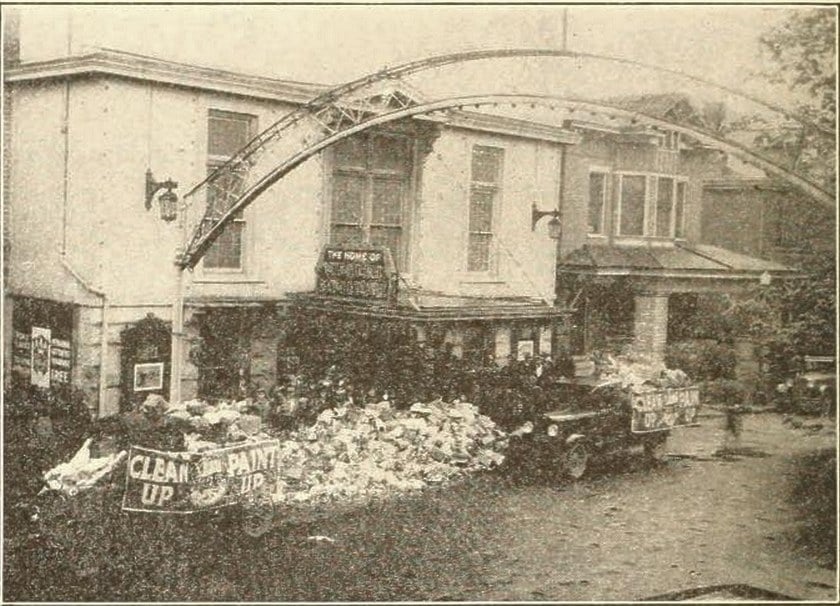
The Majestic Theatre in Chillicothe bills itself as the oldest continuously operating theatre in America, and its darkest chapter is documented history rather than folklore. During the 1918 flu pandemic, Camp Sherman just north of town lost roughly 1,777 soldiers. The mortuary across the street ran out of room, so bodies were carried into the Majestic, stored in the dressing rooms and embalmed on the stage. Crews poured the embalming fluid out into the alley behind the building, and that alley has been called Blood Alley ever since. The ghost stories followed. Visitors report soldiers, and a little girl and a keys-jingling janitor turn up in almost every account.
Can you visit? Yes. It’s a working theatre with a full calendar, and the box office is at majesticchillicothe.net.
Helltown
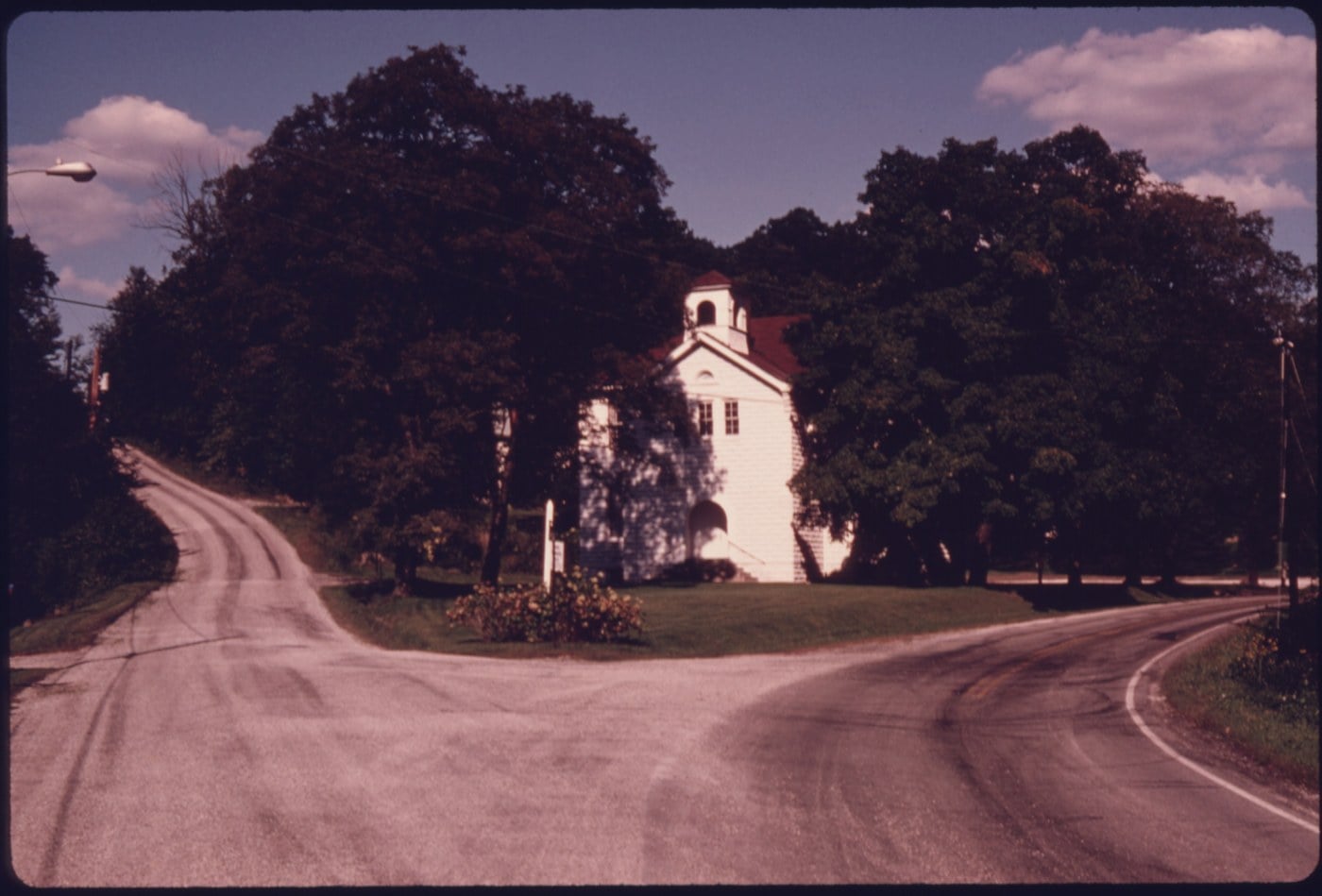
Helltown is what people started calling the village of Boston, in Summit County, after most of it emptied out. President Ford signed Cuyahoga Valley National Recreation Area into law on December 27, 1974, and the National Park Service spent the following years buying up homes in the valley. The houses in Boston sat boarded up for decades, and the rumors filled the vacancy: a satanic cult meeting in the church basement, a mutant snake in the woods, a chemical spill that drove everyone out, a road that dead-ends at the edge of the world. The real story is a land buyout, and the last of the empty houses came down in 2016.
Can you visit? Yes. It’s all national park land now, open every day, and Boston Mills Road and Main Street are ordinary public roads. The park’s Boston Mill Visitor Center at 6947 Riverview Road in Peninsula sits right in the old village. The cemetery at the end of Main Street is the most intact piece of the original town. The handful of old structures still standing near it are private property.
Gore Orphanage
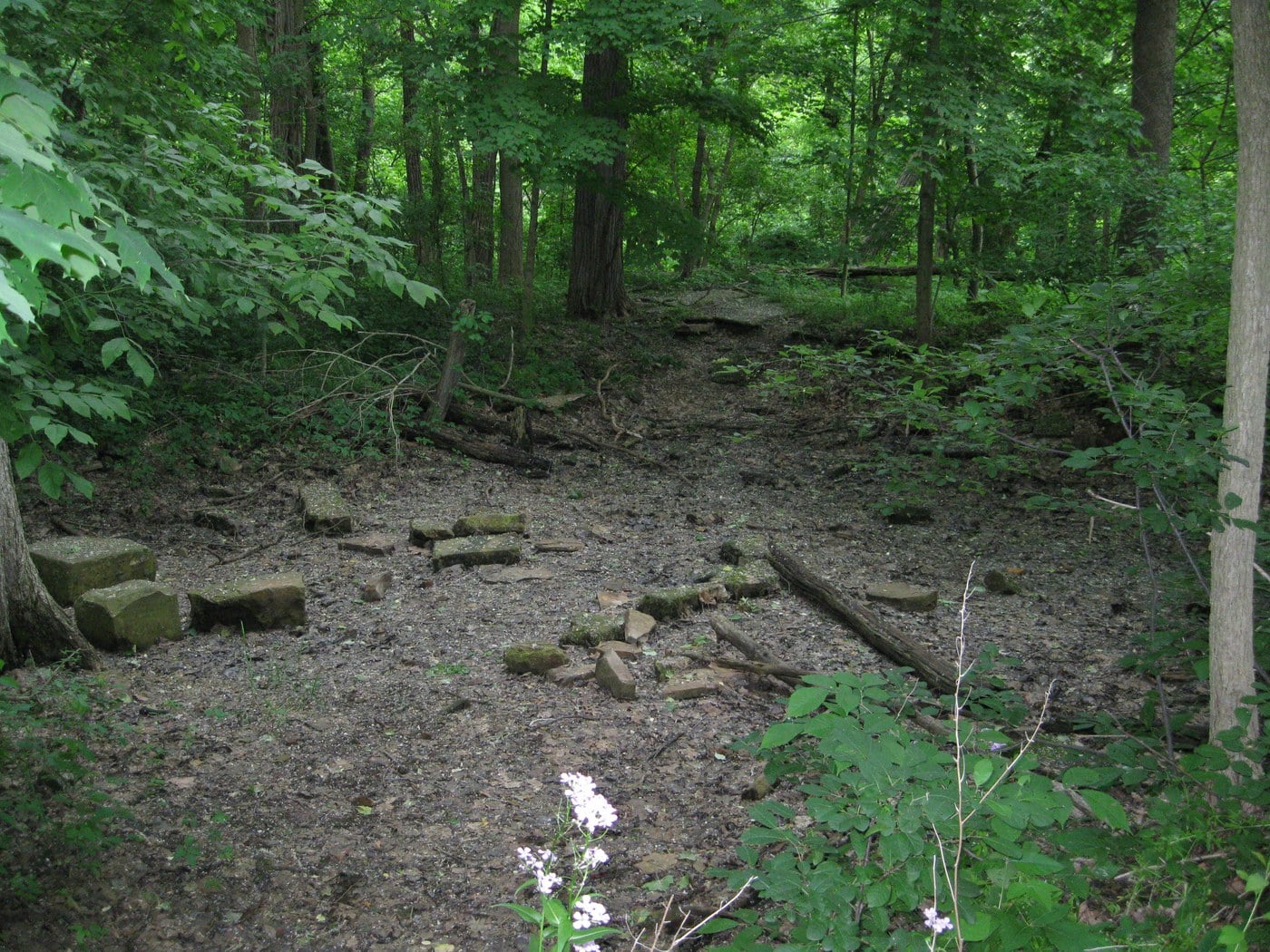
The version that gets passed around Lorain County is that an orphanage on Gore Orphanage Road near Vermilion burned with the children inside, and that you can still hear them at night. The Vermilion Historical Society has spent years untangling it. There was a real orphanage, the Light of Hope, founded in 1902 by a preacher named Johann Sprunger, and conditions there were bad enough to draw an investigation. There was a real mansion in the hollow, built by Joseph Swift in the mid-1800s, that vandals burned in late 1923. And there was a real fire that killed schoolchildren, but it happened in 1908 in Collinwood, forty miles east, and the memory seems to have migrated. The historical society’s own conclusion: there is no proof that any child died at Gore Orphanage.
Can you visit? Sort of. Gore Orphanage Road is a public road and the drive through the hollow is the whole experience. The sandstone foundation blocks of the Swift Mansion are still in the woods near where Gore Orphanage Road meets Sperry Road, covered in graffiti from late-night visitors. It’s not a park with hours or a trail, so stay on the road.
The Ridges
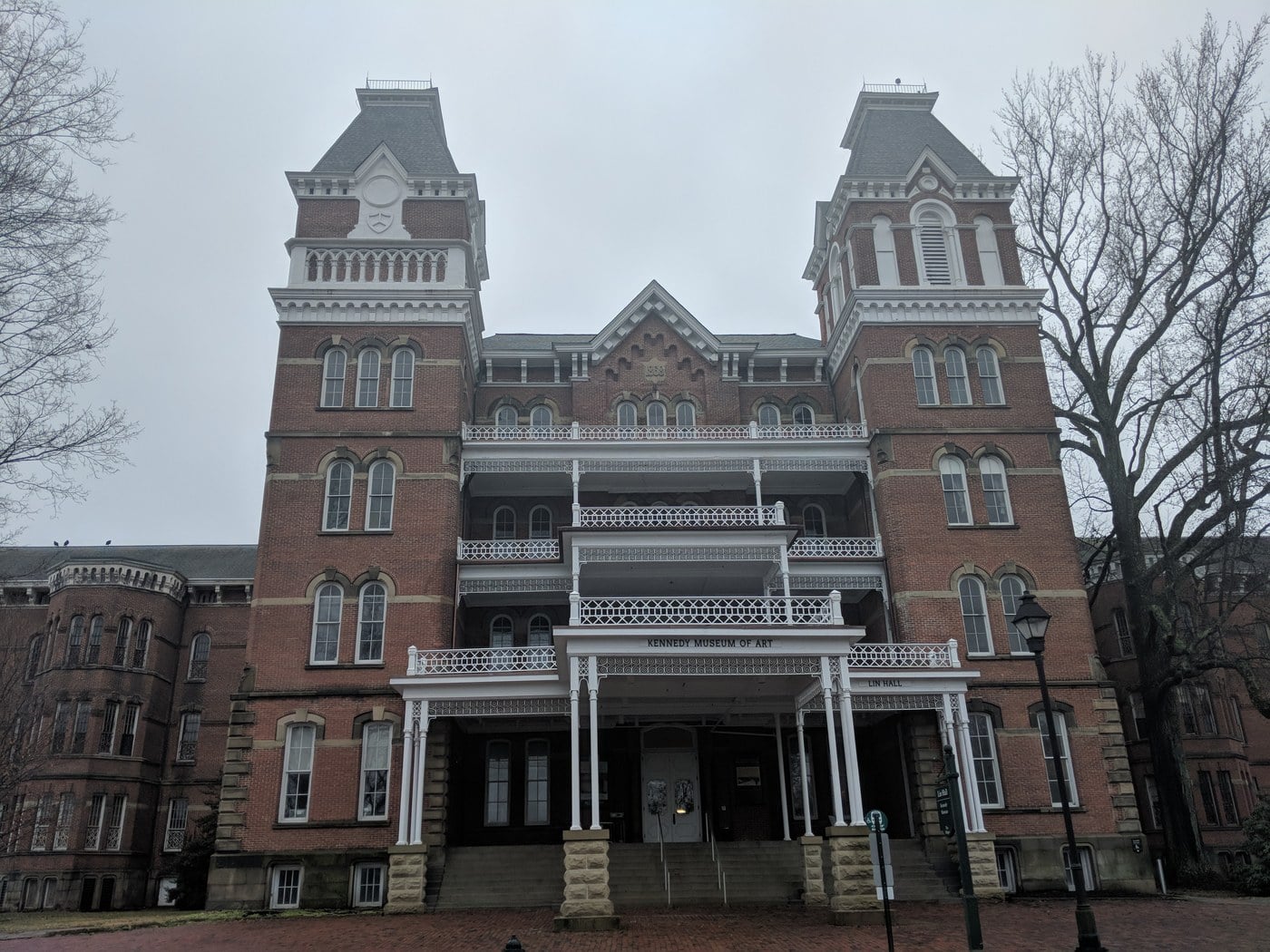
The Athens Lunatic Asylum opened in 1874 on a hill across the river from Ohio University, built on the Kirkbride plan with long wings, tall windows and grounds meant to do part of the healing. The state handed the property to the university in 1988, a community contest renamed it the Ridges, and the last patients left in 1993. The story that outlasted all of it belongs to Margaret Schilling, a patient who went missing in December 1978 and was found weeks later in a closed-off part of the hospital. Her body left a stain on the floor that is still there. That part is not folklore.
Can you visit? Yes. The main Kirkbride building is now Lin Hall and houses the Kennedy Museum of Art, which is free. The Southeast Ohio History Center runs walking tours of the asylum grounds, and the hiking trails, including Radar Hill, are open to the public. Details at ohio.edu/ridges. The museum, the grounds and the tours are the public side of it. The old wards are not.
The Lady of Mirror Lake

Ohio State’s own ghost story has been running in The Lantern since at least 1998. On cold nights a woman in pink is said to skate, or float, across Mirror Lake. The campus version ties her to a professor named Clark who lost his money in an Alaska oil venture around the turn of the last century and died by suicide in the garden where Pomerene Hall now stands. His wife, the story goes, swore she would never leave the place, and after her death in the 1920s the sightings began. Staff in Pomerene Hall have reported footsteps in empty hallways and locked doors standing open. The Lantern’s own reporting files all of it under lore, not record.
Can you visit? Yes. Mirror Lake sits in the middle of Ohio State’s campus, just south of the Oval, and it’s open to anyone walking through.
Loveland Frogman

Ohio’s most famous cryptid is a four-foot amphibian that supposedly walks upright along the Little Miami River in Loveland, northeast of Cincinnati. A businessman reported watching three of them beside a bridge one night in 1955. The story got a second life in 1972, when two Loveland police officers reported separate encounters within a couple of weeks and one of them fired a shot at what he saw. Both officers later walked it back, and one said the thing was a large iguana. The Frogman shrugged off the debunking and has been Ohio’s mascot-in-waiting ever since. Lawmakers have even proposed making it the official state cryptid.
Can you visit? Sort of. Loveland is a real town with a riverfront and a well-used bike trail, and every local will point you at a different bridge.
READ MORE: Ohio Politics Has Entered Its Cryptid Era, Apparently
Ohio Urban Legends FAQ
What is Ohio’s most famous urban legend?
Bessie, the Lake Erie monster, has the longest record. Sightings go back to 1793. The Loveland Frogman is the one with the most cultural momentum right now.
Does Ohio have a state cryptid?
Not officially. Lawmakers have proposed giving the title to the Loveland Frogman.
Which Ohio legends can you actually visit?
Moonville Tunnel, the Hope Furnace ruins at Lake Hope State Park, the Witch’s Tower in Hills & Dales MetroPark, the Ohio State Reformatory, Franklin Castle, the Majestic Theatre, the Ridges in Athens, Mirror Lake at Ohio State and the old village of Boston in Cuyahoga Valley National Park are all open in some form. Mudhouse Mansion is not; it was demolished in 2015.
What is the scariest place in Ohio?
The Ohio State Reformatory in Mansfield gets the most votes, partly because it leans into it. The building runs ghost tours year round and turns into the Blood Prison haunted attraction every fall.
Where is Helltown, Ohio?
Helltown is the nickname for the old village of Boston in Summit County, inside Cuyahoga Valley National Park. The park is open every day and the roads through the village site are public. The empty houses that fed the legend came from a 1970s federal land buyout and were torn down in 2016. The full story is in the Helltown entry above.
Is Ohio actually haunted?
Ohio has an unusually deep bench of ghost stories, and a lot of them attach to real events: a 1918 flu outbreak at Camp Sherman, an 1880 train collision at Moonville, a 1967 lightning strike in a Dayton park. The events are documented. The rest is up to you.
Get out there and explore Ohio, my friends. You never know what sort of spooky legends you might come across.