Long before the Buckeyes ruled Columbus and long before fantasy football ruined your Sunday afternoon, there was a gritty little team made up of railroad workers, playing smashmouth football behind a machine shop. Their name? The Columbus Panhandles.
The Panhandles weren’t just any early football team. They were a band of boilermakers (really) with cleats and a dream.
| Columbus Panhandles at a glance | |
| Founded | 1901, by workers at the Pennsylvania Railroad’s Panhandle shops in Columbus |
| Manager | Joe Carr, 1907 to 1922, who went on to run the NFL from 1921 to 1939 |
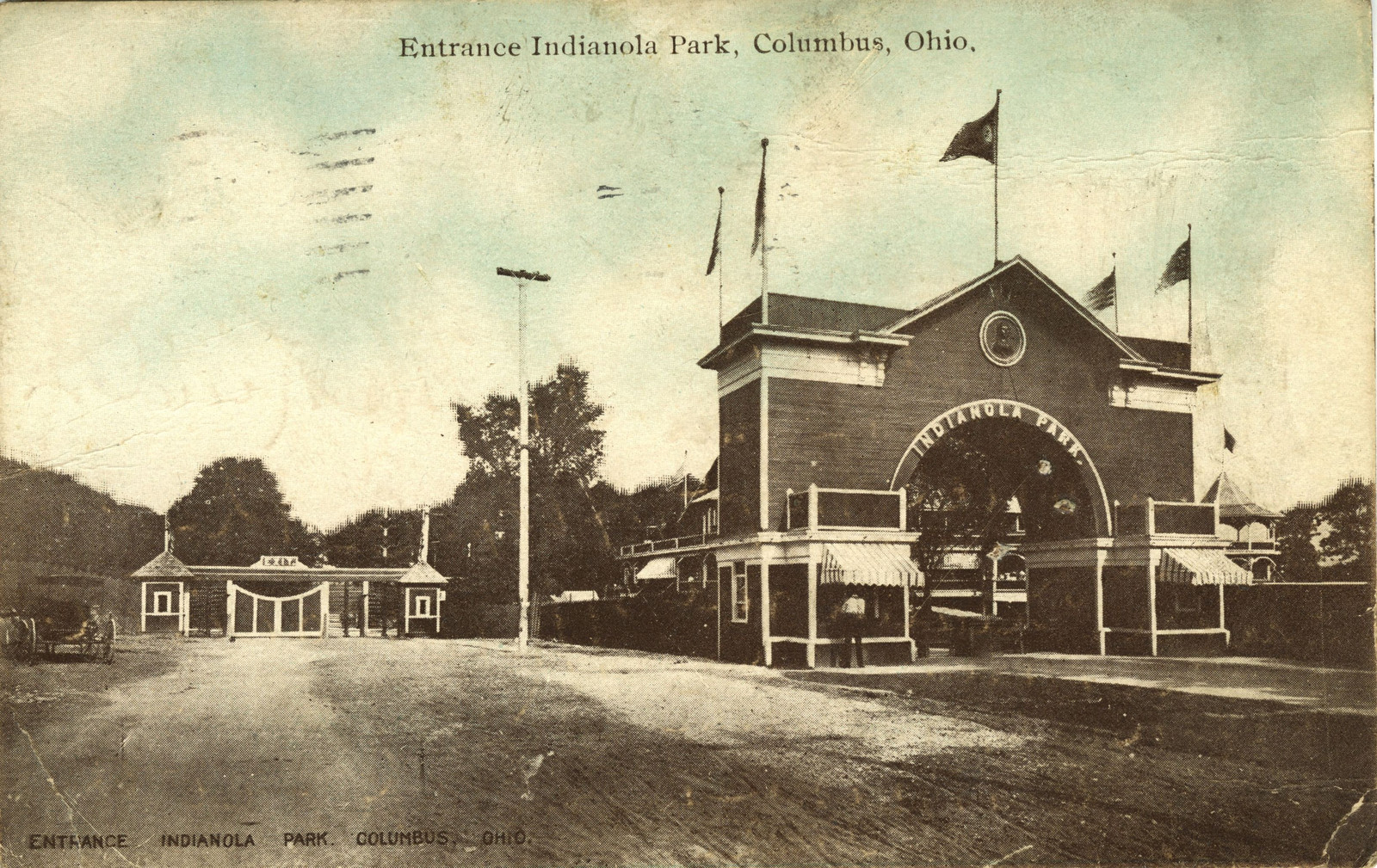
| Home field | Indianola Park, North Fourth Street and East 19th Avenue |
| Practice field | The cinder lot outside the railroad shop gates, on the lunch break |
| Star attraction | The Nesser brothers, six of them on one roster |
| First NFL game | October 3, 1920, at Triangle Park in Dayton: Triangles 14, Panhandles 0 |
| NFL seasons | 1920 to 1922 as the Panhandles, 1923 to 1926 as the Columbus Tigers |
| Best finish | Eighth in the league, 1923 |
| Still standing | The league’s old office at 16 East Broad Street, with a plaque out front since 2025 |
Born in 1901 out of the Pennsylvania Railroad’s Panhandle Division (hence the name), the team started as a way for workers to blow off steam and maybe break a few bones in the process. Games were scheduled through newspaper ads and word of mouth. Practices? Usually during their lunch break.
The players ate for 15 minutes and spent the next 45 running drills behind the rail yard. The Panhandles didn’t train in gleaming stadiums. Their practice field was tucked behind a rail yard, echoing with hammer blows and reeking of grease.
The team had its ups and downs early on.

OK, mostly downs. They lost a lot. But in 1907, a sportswriter named Joseph Carr took the wheel. Carr, who managed the railroad’s baseball team and had a vision of pro football that involved more than beer money and broken noses, figured he could turn this scrappy outfit into something bigger.
Carr had two secret weapons: free train rides and the Nesser brothers.
Because most of the Panhandles worked for the railroad, they could travel for free.
That meant the Panhandles became one of the sport’s earliest barnstorming teams, playing on the road to avoid stadium costs at home. It also meant that wherever the rails ran, the Panhandles could follow. They played in small towns and industrial cities, anywhere a crowd could gather.
Then there were the Nessers.

If you’ve never heard of the Nesser brothers, congratulations, you’ve been living a life untouched by early-20th-century football folklore. The Nessers were six brothers on one roster at their peak, seven if you count the youngest, Ray, who was advertised more often than he played. They worked as boilermakers and played like they were built out of leftover train parts. Frank Nesser stood 6-foot-1 and weighed somewhere between 235 and 250 pounds, depending on the source. Either number was a terrifying sight in 1910, when most men were built like scarecrows.
They didn’t go to college. They didn’t need to. They tackled like bulls and blocked like locomotives. They were the Panhandles’ main draw, the kind of team centerpiece you could advertise by just shouting their name. In 1921, Ted Nesser even played alongside his own son, Charlie. The Pro Football Hall of Fame still counts them as the only father and son ever to share an NFL roster.
And while they never brought home a title, the Panhandles do have one claim to fame that no one can take away…
They played in what is considered the first-ever NFL game. It was October 3, 1920. The Panhandles took the field against the Dayton Triangles and lost 14–0. Rock Island and Muncie played the same afternoon out in Illinois, but the Dayton game kicked off first. The league and the Pro Football Hall of Fame both count Triangle Park as the birthplace. An Ohio Historical Marker stands on the spot.

After that, the team limped along. Carr eventually became president of the league, the very same league that became the NFL. The Panhandles, meanwhile, were rebranded as the Columbus Tigers in 1923. They had some flashes of competence (finishing eighth one year!) but by the late 1920s, the team faded away.
The NFL moved on and never came back. Pro football did. The Columbus Bullies won back-to-back American Football League titles in 1940 and 1941 out of Red Bird Stadium, the ballpark the city later knew as Cooper Stadium, the Ohio Glory played at Ohio Stadium for one season (1992), and the Columbus Destroyers played arena football at Nationwide Arena from 2004 to 2008 and for one last season in 2019. Currently, the Columbus Aviators play at Historic Crew Stadium in the United Football League, a spring league.

The NFL was run from a Columbus office for 18 years
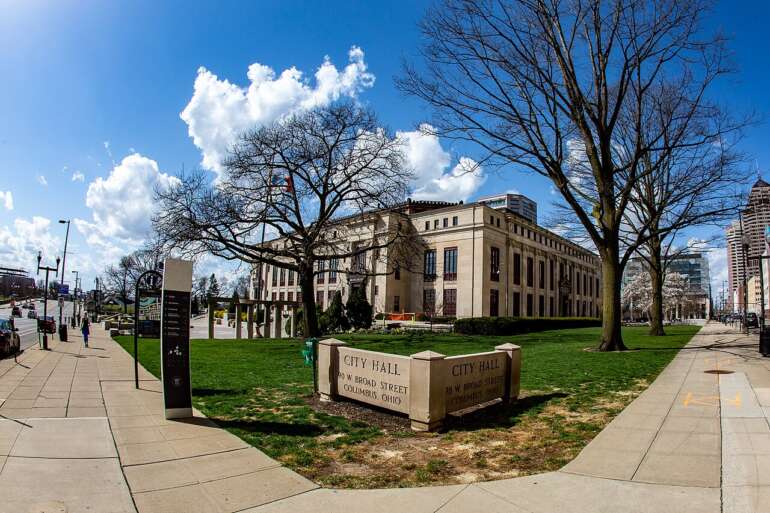
Carr’s part in the story didn’t end with the Panhandles. The league’s owners elected him president at their April 1921 meeting in Akron, and he ran the league from Columbus for the rest of his life, first out of two houses and then from the 11th floor of the New Hayden Building at 16 East Broad Street, across from the Statehouse. His secretary there, Kathleen Rubadue, was the first woman to work for the NFL. From that office Carr wrote the league’s standard player contract, pulled Green Bay’s franchise over college ringers and handed it to new owners a few months later, and pushed the league into New York with the Giants in 1925. He died of a heart attack on May 20, 1939, still president. The league’s MVP trophy carried his name through 1946, and Canton put him in the Pro Football Hall of Fame with its first class in 1963.

What’s left of the Panhandles today
More than you’d expect for a team that folded a century ago.
- 16 East Broad Street. The New Hayden Building still stands on Capitol Square, renovated for offices by the Tomko Co. On September 20, 2025, a plaque marking the NFL’s first office building was unveiled out front, with Carr’s and Rubadue’s descendants on hand.
- Triangle Park, Dayton. Ohio Historical Marker 9-57, “Site of First Game in the NFL,” stands beside Howell Field off Ridge Avenue. The league paid for a new turf field there for its 100th season.
- Indianola Park. The Panhandles’ home field was the athletic ground inside the amusement park at North Fourth Street and East 19th Avenue. The park closed in 1937, and the Indianola Park site is a shopping center today.
- The practice grounds. The cinder lot sat just outside the gates of the Pennsylvania Railroad’s 20th Street shops on the Near East Side, ground that Interstate 670 runs through now. Lee Snoots, a longtime Panhandles halfback, also recalled Carr taking the team to “a hole in the ground at Naghten and High Streets just south of Union Depot” for night practices under the streetlights. Union Station is gone, and the Greater Columbus Convention Center sits on that ground.
- Joe Carr’s grave. St. Joseph Cemetery in Lockbourne, south of the city.
- Canton. Carr’s bust has been in the Pro Football Hall of Fame since the first class in 1963. No Nesser is enshrined, but the Hall notes that on December 2, 1921, five Nesser brothers played in one game for the Panhandles against the Louisville Brecks, a mark no family has matched.
- The photographs. The team portraits on this page are W.D. Nice studio prints held by Columbus Metropolitan Library, which put them online through the Digital Public Library of America.
But the Panhandles? They mattered.
They were proof that football didn’t need packed stadiums and billion-dollar TV deals to be compelling. It could be dirty, sweaty, slightly disorganized, and still grip a crowd. It could be played by men who spent their days wielding sledgehammers and their Sundays cracking shoulder pads.