Every year, Columbus Landmarks releases a list of historic buildings and places that are at risk of being lost to demolition, neglect, vacancy, or redevelopment pressure.
The organization’s 2026 Most Endangered Sites list includes five properties across Columbus, but two of them stand out immediately: the Beacon Building Downtown and Fairwood Elementary School on the East Side.
Both are architecturally significant. Both are deeply tied to Columbus history. And both are facing uncertain futures.
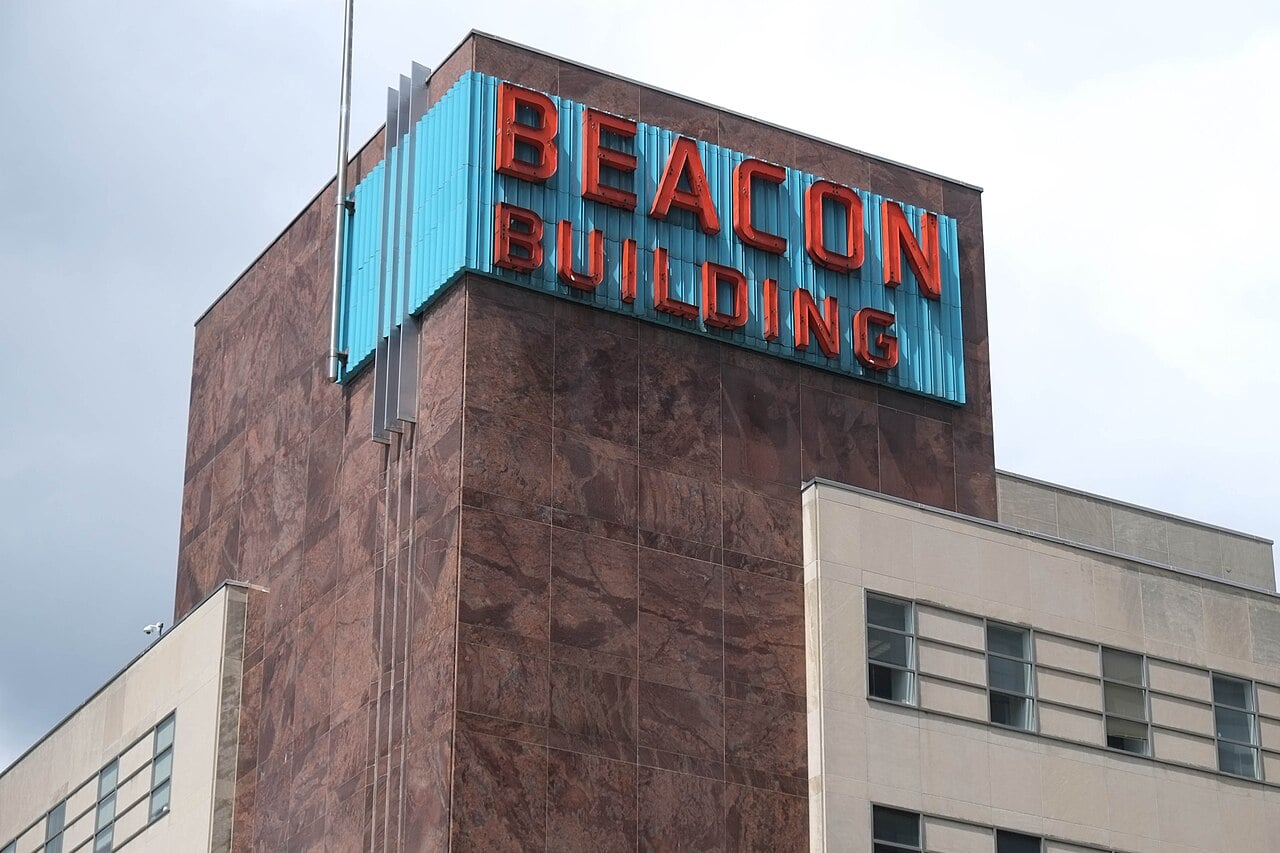
If you’ve spent any time Downtown, you’ve probably noticed the Beacon Building.
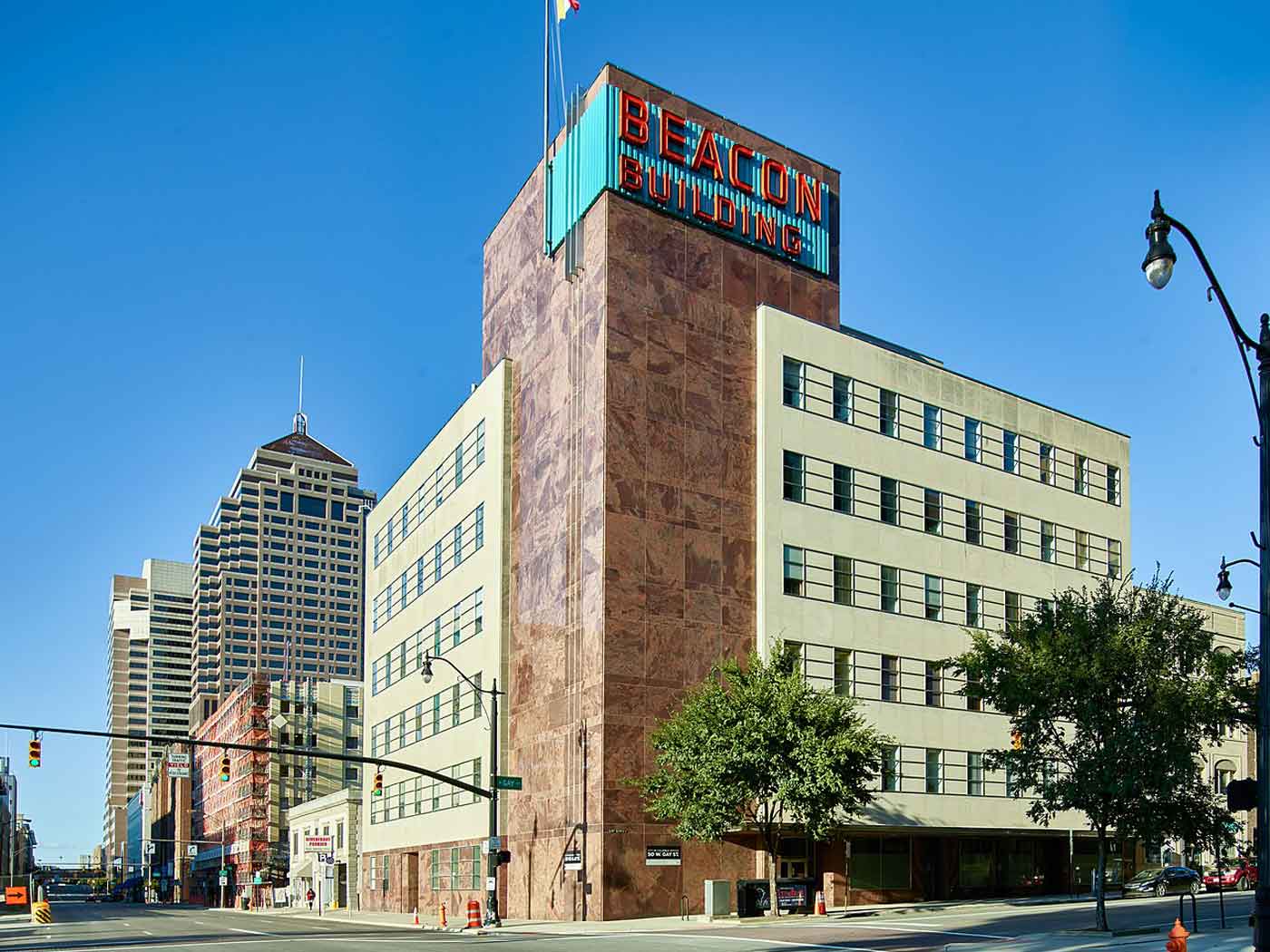
The six-story Mid-Century Modern office tower at 50 W. Gay St. was built in 1957 for the Beacon Mutual Indemnity Company and features one of the more recognizable facades in Downtown Columbus, complete with red granite, limestone curtain walls, and the glowing neon Beacon sign mounted on top.
For decades, the building housed city offices after Columbus purchased it in the late 1970s. But since municipal operations moved to the Coleman Government Center in 2018, the building has remained vacant.
That vacancy is a big part of why preservation advocates are worried.
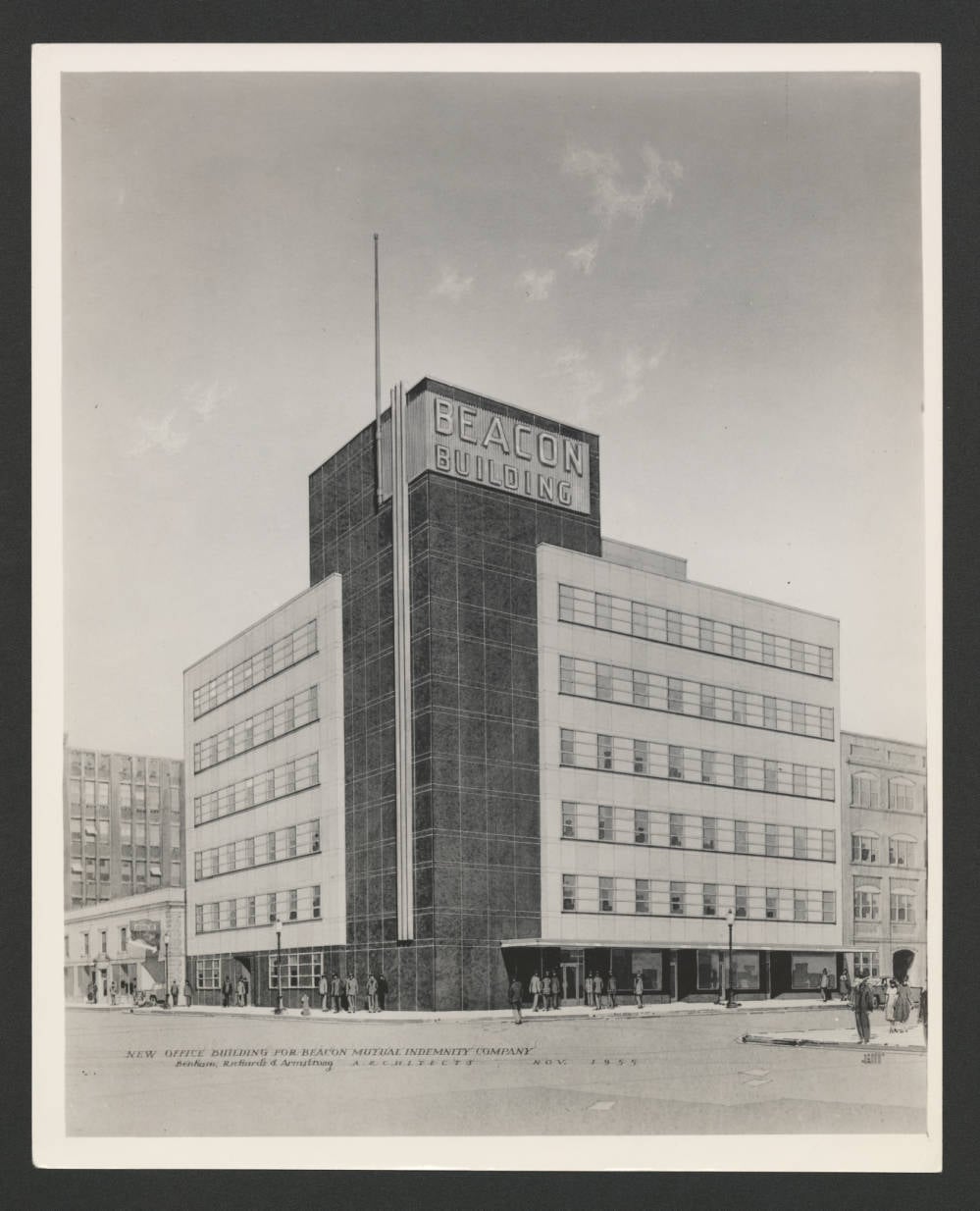
Mid-Century Modern buildings often exist in an awkward preservation gray area. They’re old enough to be historically important, but not always old enough for the public to instinctively see them as “historic.” As redevelopment continues reshaping Downtown, buildings from the 1950s and 1960s are increasingly vulnerable.
The Beacon Building is one of the clearest examples of that tension playing out locally.
Among the buildings highlighted this year is Fairwood Elementary School, a historic 1921 school on the East Side.
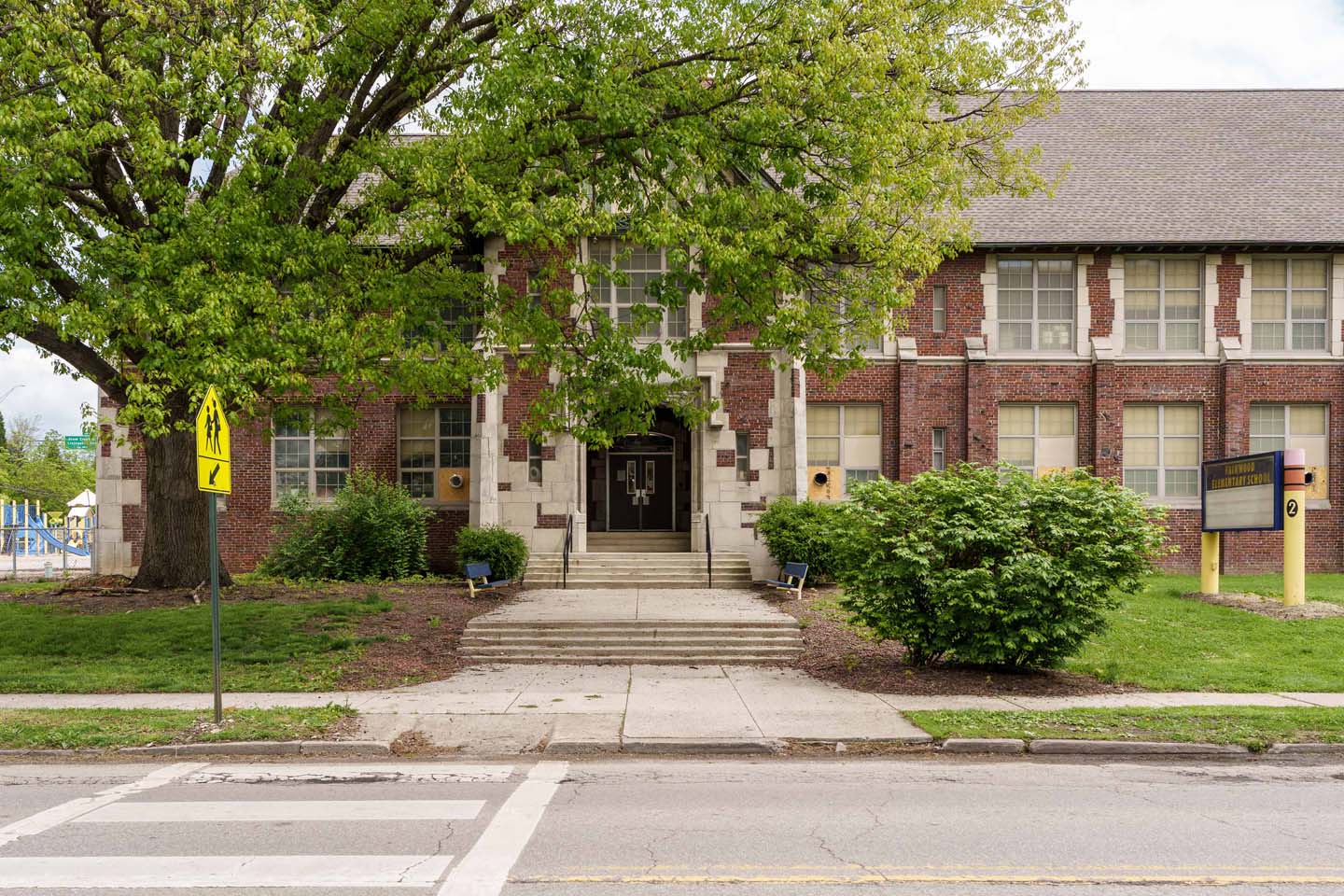
Built in 1921, the school was designed by Howard Dwight Smith, the architect behind Ohio Stadium. According to Columbus Landmarks, Fairwood was constructed specifically to serve Columbus’ growing Black population on the East Side during a period of rapid neighborhood growth.
Architecturally, the building stands out immediately. The Tudor Revival-style school features red brick, decorative stonework, half-timbered entrances, and narrow windows that give it a look unlike most schools built today.
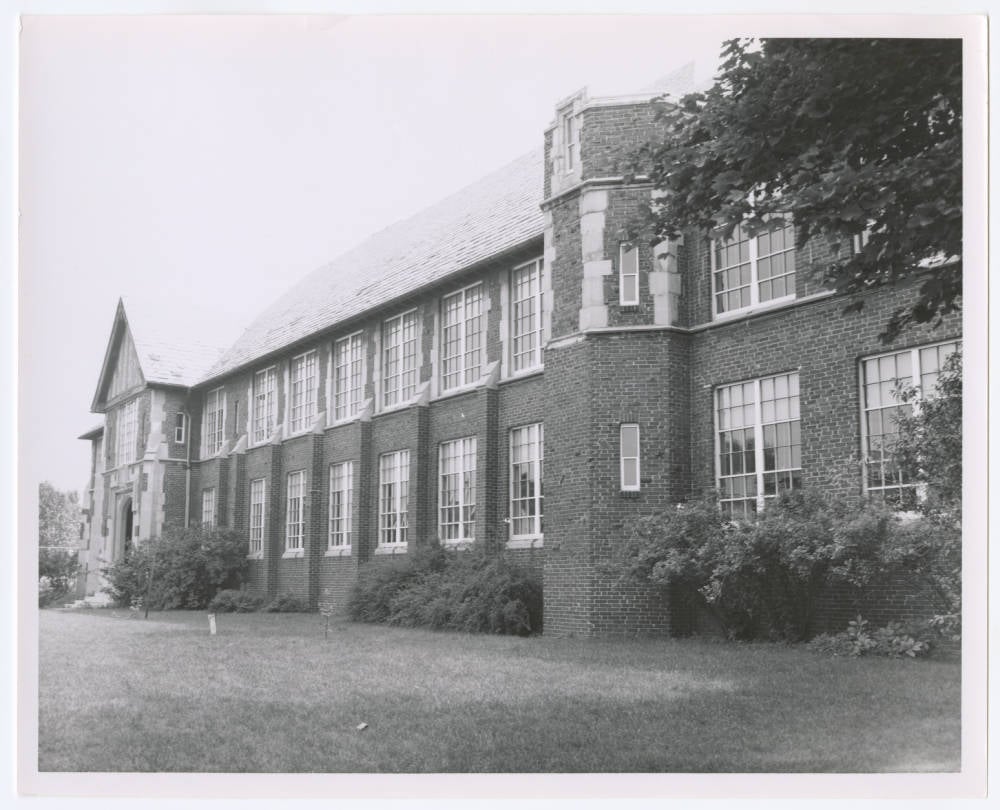
The building is still operating as a Columbus City School, but it’s expected to close at the end of the current school year. Preservation groups are concerned it could eventually face demolition, especially as the district evaluates aging school buildings across the city.
In addition to the Beacon Building and Fairwood Elementary, Columbus Landmarks also highlighted:
- 871 Carpenter Street (Southern Orchards) — A rare 1870s camelback-style masonry building tied to Columbus’ early neighborhood growth.
- 147-157 Thurman Avenue (German Village) — Long-vacant residential buildings suffering from severe deterioration and concerns over demolition by neglect.
- Courtright School (East Side) — A striking Egyptian Revival-style former school designed by Howard Dwight Smith and later converted into a church.
Columbus changes quickly. Entire streets can transform within a few years, and older buildings often disappear before most people realize they were historically significant.
That’s why lists like this exist in the first place.
Sometimes public attention leads to restoration projects or adaptive reuse plans. Other times, these lists simply document the places that helped shape the city before they vanish.
And while flashy new developments tend to dominate conversations about Columbus’ future, preservation groups argue that the city’s identity is tied just as much to the buildings that have already been here for generations.
Once they’re gone, there’s no rebuilding the original version of them. You can view the full list of the Most Endangered Sites over at columbuslandmarks.org.