Before Ohio became a patchwork of cornfields and suburbs, much of the state was covered in sweeping tallgrass prairies. Wildflowers stretched to the horizon, and wildlife thrived across landscapes that have all but disappeared.
Today, less than one percent of Ohio’s original prairies remain. But one of the best-preserved examples is hiding just 35 minutes outside of Columbus.

Tucked away in Union County, Bigelow Cemetery State Nature Preserve protects one of the last surviving pieces of Ohio’s historic Darby Plains prairie.
At first glance, it doesn’t look like much. The preserve covers just half an acre, making it smaller than many suburban backyards. But what it lacks in size, it more than makes up for in significance.
The reason this tiny patch of prairie still exists is surprisingly simple: it was never farmed.
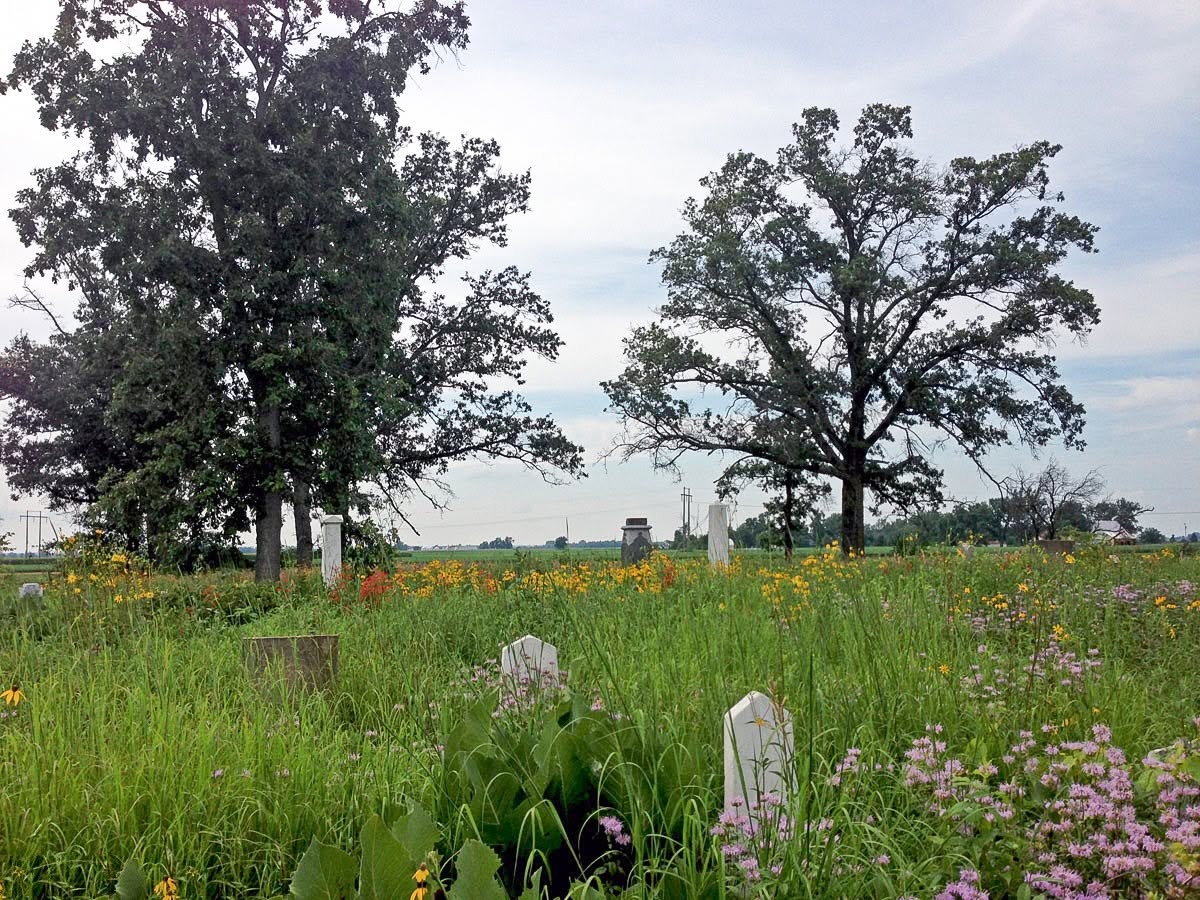
For generations, the land served as a pioneer cemetery. While the surrounding prairie was gradually plowed under and transformed into farmland, this small hilltop was left largely untouched. Because it was never cultivated or heavily grazed, native grasses and wildflowers continued to flourish long after they had disappeared from much of the rest of Ohio.

Today, Bigelow Cemetery State Nature Preserve is home to the largest known population of the threatened royal catchfly in Ohio. The scarlet wildflower blooms in mid-to-late summer, attracting ruby-throated hummingbirds that dart from flower to flower. Visit in July or August, and you’ll find one of the state’s most colorful native wildflower displays packed into an incredibly small space.
Scattered among the prairie grasses are weathered pioneer headstones, a reminder that this peaceful landscape has served two purposes for well over a century. Visitors can wander the designated paths while taking in both the natural beauty and the area’s history. If you’re curious about the families buried there, you can read more about the cemetery’s history here.
It won’t take long to explore Bigelow Cemetery State Nature Preserve.
In fact, you’ll probably spend more time stopping to admire the flowers than walking the trails. But that’s exactly what makes it special.
It’s not a place to check off a hiking bucket list or spend an entire afternoon. It’s a chance to stand in one of the last surviving fragments of a landscape that once defined Ohio.
If you go, remember that this is a protected nature preserve. Stay on designated trails, leave the wildflowers where you find them, and leave your pets at home. The preserve is open daily from dawn until dusk.
Bigelow Cemetery State Nature Preserve is located at 600 Rosedale Rd. in Irwin, about 35 minutes northwest of Columbus. For more information, visit the Ohio Department of Natural Resources.