

There’s nothing like spending time out in the great outdoors.
Ohio has a reputation as being mostly cornfields, but we all know that’s not exactly accurate. We’ve got a lot to offer here in the Buckeye state, from stunning waterfalls to elaborate cave systems.
Maybe you want to get off the beaten path, or maybe you just want a good look at the state’s natural splendor. Either way, this list has you covered. We’ve gathered our favorite under-the-radar spots and natural wonders and organized them by region. If there’s a beautiful spot you think deserves more appreciation, let us know.
Ohio’s natural wonders run from the glacial grooves on Kelleys Island and the recess caves of the Hocking Hills to underground cavern systems, ancient effigy mounds, and dozens of waterfalls and gorges. Here are 33 of the best, sorted by region, with the access details, fees, and permits you’ll actually want before you go.
Jump to a region: Northwest · Northeast · Central · Southwest · Southeast · FAQ
Northwest
Glacial Grooves Geological Preserve | Kelleys Island

The Glacial Grooves on the north side of Kelleys Island are a National Natural Landmark. The exposed grooves run 427 feet long, 33 feet wide, and up to 10 feet deep, and a $2.27 million renovation finished in 2023 added accessible walkways and an overlook bridge, so you can get closer to them than ever. The limestone is full of marine fossils that are roughly 400 million years old.
Castalia State Fish Hatchery | Castalia
If you’ve ever wondered what a Blue Hole looks like, you don’t have to go too far to find out. Located in Castalia, this stunning blue hole is part of the Castalia State Fish Hatchery. The cool water from the blue hole stays extremely cool year round (around 48 degrees), making it a tremendous help to the process of hatching fish. Many years ago, a much larger blue hole that is part of the same system gained popularity as a local attraction, but that blue hole has since been closed to the public. The hatchery offers self-guided tours on weekdays from 8 a.m. to 3 p.m. (closed weekends), plus the occasional fishing lottery. Even though this particular blue hole is smaller than the OG, it’s still pretty darn impressive!
Fossil Park | Sylvania

Northwest Ohio used to be a massive sea full to the brim with prehistoric life. Fossil Park is a 5-acre, handicap accessible quarry where you can break open fossils for yourself and see the evidence of this ancient world. Fossil hunting is completely free for the whole family. Just know the digging pit is only open from mid-April through the end of October, and tools aren’t allowed. The shale is soft enough to break open with your bare hands.
Ohio Caverns | West Liberty

These colorful caverns have over 2 miles of surveyed passageways, ranging in depth from 30 feet to 103 feet. The highlight of any visit to Ohio Caverns will be a stop at the largest stalactite in Ohio, The Crystal King. There are a variety of tours offered at Ohio Caverns and you can check out tour prices and more right here.
Seneca Caverns | Bellevue
Seneca Caverns may have been discovered in 1872, but they’re much, much older. This geological wonder has remained largely untouched, offering a unique look back in time. Tours run daily in summer and weekends only in spring and fall. The caverns close from November through April, so check the schedule before the drive.
Oak Openings Metro Park | Toledo

Oak Openings Preserve is a massive, 5,000-acre Metropark just outside Toledo. The park is home to a public treehouse, The Great Black Swamp, oak savannah, and even a sandy area that was named one of the “Last Great Places on Earth” by The Nature Conservancy.
Northeast
Johnson Woods State Nature Preserve | Marshallville

Johnson Woods is home to some of the oldest and most impressive old-growth forest in Ohio. Several trees in the forest are over 400 years old and some reach impressive heights of 120 feet with a diameter of 4 to 5 feet.
Nelson-Kennedy Ledges State Park | Garrettsville
Nelson-Kennedy Ledges State Park may not be the largest park in Ohio, but it’s absolutely stunning. The rugged cliffs are breathtaking and totally worth a visit. The rock formations resemble those seen frequently throughout Hocking Hills, but they are very rare for the northeast region of Ohio. The newest reason to go is the Falls Edge Glass Walkway, a 137-foot span over Sylvan Creek Gorge that opened in spring 2025.
Mill Creek Falls | Cleveland

Mill Creek Falls stands proud at 48 feet, making it the tallest waterfall in Cuyahoga County. There’s a beautiful overlook at The Yard at Mill Creek Falls that is super easy to get to. The falls are beautiful any time of year, but especially in the autumn.
Cuyahoga Valley National Park | Brecksville

Cuyahoga Valley National Park has more good spots than you can hit in a day, so give yourself a whole weekend. Start with Brandywine Falls, a 65-foot cascade that’s the tallest waterfall in Ohio and an easy boardwalk walk from the parking area. From there the park is all forest trails, river views, and quiet overlooks.
Thompson Ledges Park | Thompson

If you’re looking for a reason to visit the Thompson Ledges, how does natural beauty, rock crevices, fissures, springs, and a downright gorgeous view sound? The ledges are the perfect place to enjoy a summer hike and followed by a delicious picnic. Remember to take any items you bring with you back out when you leave the ledges!
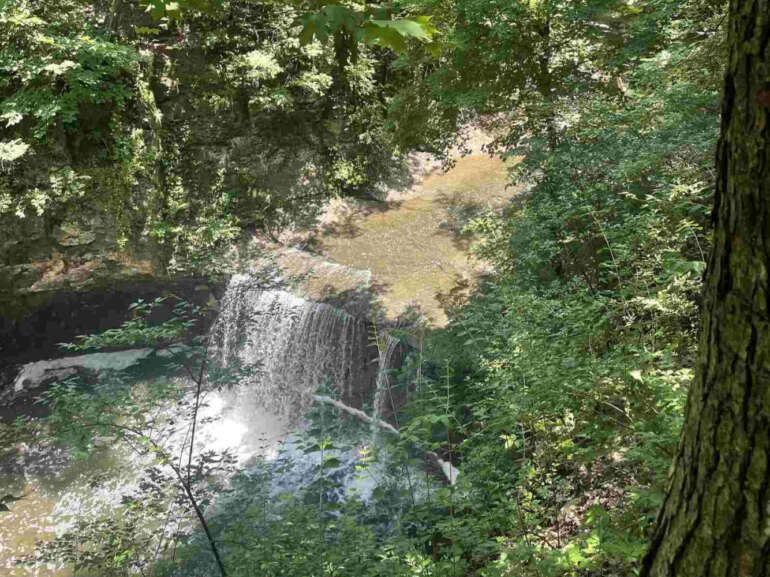
Honey Run Waterfall | Howard
This 25-foot waterfall is located in Knox County and is well worth a day trip from Columbus. Hike from the waterfall alongside the Kokosing River and when you’re done, take a break on the bench overlooking the falls. Honey Run has some truly incredible geological features that aren’t often found in Ohio, and you can read more about them right here.
Columbia Road Park | Bay Village
This 1.5 acre park is home to one of the best kept secrets on Lake Erie’s shores. A beautiful waterfall tumbles down onto a sandy beach at Columbia Park. With a paved trail and stairs to Lake Erie, it’s a must-visit spot if you find yourself in The Land!
Central
Hayden Falls | Dublin

The best time to visit Hayden Falls is after a nice rain storm. The walk down to the viewing area is pretty simple but it can get crowded, so if you’re looking to keep your distance, try to visit early in the morning.
Olentangy Caverns | Delaware

Formed millions of years ago by an underground river cutting through limestone rock, Olentangy Caverns is truly a wonder. The caverns are open daily from mid-March through the start of November, so you’ve got most of the year to see them for yourself.
Shrum Mound | Columbus

Shrum Mound is one of the last remaining ancient burial grounds in Columbus. The mound was constructed roughly 2,000 years ago by the people of the ancient Adena culture and is 20-feet high with a 100-foot-diameter.
Rock Mill | Lancaster

The mill may be man made, but the stunning waterfall where the Hocking River billows over the rocks is the definition of a natural wonder. This is a quick afternoon visit from downtown Columbus and a great place to cool off during the hot summer months. The falls and covered bridge are open dawn to dusk year-round, but if you want to see inside the mill, time your visit: it only opens May through October, Wednesdays and Saturdays 11 a.m. to 2 p.m. and Sundays 1 to 4 p.m. You can read more about the history of Rock Mill here.
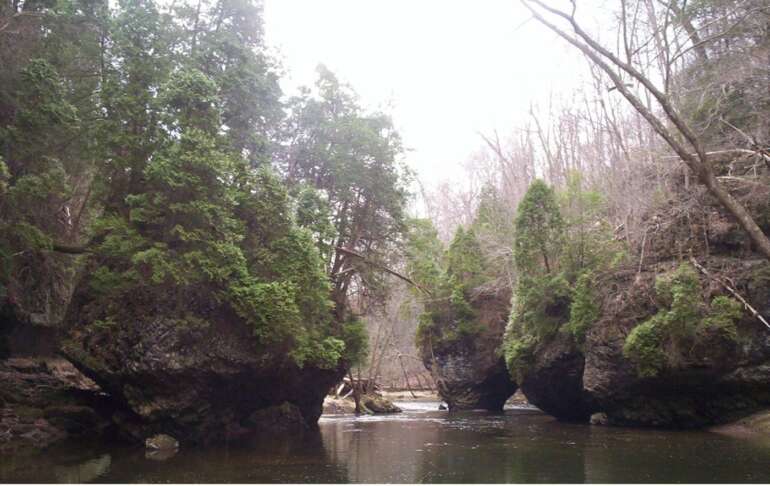
Blackhand Gorge | Newark

Blackhand Gorge is one of the most surreal sites in central Ohio. The most impressive feature of the 775-acre preserve is a narrow gorge cut by the Licking River through the famous Black Hand sandstone formation. The name “Blackhand” originated from a dark, hand-shaped petroglyph that was engraved on the face of a massive sandstone cliff along the north side of the river. The main paved trail reopened at the end of 2025 after a year of erosion repairs, so the whole gorge is walkable again.
Indian Run Falls | Dublin

Indian Run Falls is one of my absolute favorite destinations in central Ohio when I’m craving green spaces and nature. The falls are best viewed after a solid rainstorm and there are great trails to explore, picnic areas to chill, and wildlife to snag blurry photos of. Maybe that last one only happens to me, but regardless, you should add the falls to your list of places to visit this summer.
Overbrook Ravine Park | Clintonville
I feel a little bit guilty about sharing Overbrook Ravine because it truly is such a well-kept secret, but it’s not fair to keep such a tranquil place to myself. Located right off of North High Street in Clintonville, you’ll feel like you’ve been transported a million miles away from Downtown Columbus when you step foot in the ravine.
Shale Hollow Park | Delaware

Shale Hollow Park is a destination that’s perfect for families. The hiking is super easy and there’s plenty of great spots for the kids to splash around and do a little creeking.
Southwest
Clifton Gorge State Nature Preserve | Yellow Springs

Clifton Gorge packs rushing whitewater and sheer dolomite cliffs into one of the most dramatic preserves in the state, with three miles of trails along the Little Miami. The Exploration Center, the first at any Ohio nature preserve, opened in 2025 and runs Friday through Sunday, April through October. One heads-up for now: the Jackson Street lot and a quarter mile of the Narrows Trail have been closed since March 2026 for accessibility work, so park at the State Route 343 lot. Trust me, it’s worth planning your adventure now.
Raven Rock State Nature Preserve | West Portsmouth

Raven Rock is a striking sandstone promontory overlooking the Ohio River Valley, shaped like a bird with outstretched wings. Visitors with a permit from the Division of Natural Areas and Preserves can take in the sweeping views, check out the three natural sandstone arches, and spot rare plants like the blackjack oak and the endangered small-flowered scorpion weed.
John Bryan State Park | Yellow Springs
While you’re visiting Clifton Gorge, it would be a crime not to stop in at John Bryan State Park. There are cliffs, caves, and seasonal waterfalls. You can also camp at the park if you’d like to make a whole weekend out of visiting Yellow Springs.
Fort Ancient Earthworks & Nature Preserve | Oregonia
Ohio’s ancient earthworks should be required visiting for all of us, and the world officially agrees: in 2023, Fort Ancient became part of Ohio’s first UNESCO World Heritage Site, inscribed alongside seven other Hopewell Ceremonial Earthworks sites. The history of this region and the ancient peoples who built these incredible works deserve to be admired. Check hours before you drive down, though. The museum keeps limited days. If you’d like to learn more about the ancient earthworks here in Ohio, you can click here.
Serpent Mound | Peebles

We can’t talk about ancient earthworks and not mention Serpent Mound. Serpent Mound is the largest surviving example of a prehistoric effigy mound in the world, stretching on for 1,348 feet. Serpent Mound sits on the U.S. tentative list for its own UNESCO World Heritage nomination, separate from the 2023 Hopewell listing, but that bid is on hold now that the U.S. is leaving UNESCO at the end of 2026. It already draws tens of thousands of visitors a year. Parking runs $8 a car and the site is closed on Mondays. The gate closes at 4 p.m.
Southeast
Conkle’s Hollow Nature Preserve | Rockbridge

Conkle’s Hollow Nature Preserve is full of trails and views that will take your breath away. The hike to the rim of the gorge is one that should be taken with extreme caution, but once you get to the top, you’ll see why so many people enjoy the adventure.
Lake Katharine State Nature Preserve | Jackson

At Lake Katharine State Nature Preserve, you’ll have the chance to view some unique southern species of plants that grow there, including two different kinds of magnolias. The lake is manmade, but the valley it sits in features beautiful bluffs formed from weathering-resistant sandstone, including blackhand sandstone.
Old Man’s Cave | Logan

Of course, Old Man’s Cave isn’t a hidden gem. It’s arguably the most famous natural wonder in Ohio. But it absolutely has to be mentioned on this list. If you’ve never had the opportunity to visit Old Man’s Cave, change that this year. Photos just can’t do Old Man’s Cave or the waterfalls there justice. It needs to be experienced in person.
Ash Cave | Logan

Ash Cave is the largest recess cave in Ohio, a 700-foot-wide horseshoe of Blackhand sandstone with a rim that towers about 90 feet overhead. After a good rain, a thin waterfall spills over the lip into the gorge; it only runs when it’s wet, which is why Brandywine Falls, not Ash Cave, holds the tallest-waterfall title. It’s the easiest hike in the Hocking Hills, a flat, paved quarter-mile path back to the shelter, which makes it the one to bring anyone who can’t manage the stairs at Old Man’s Cave.
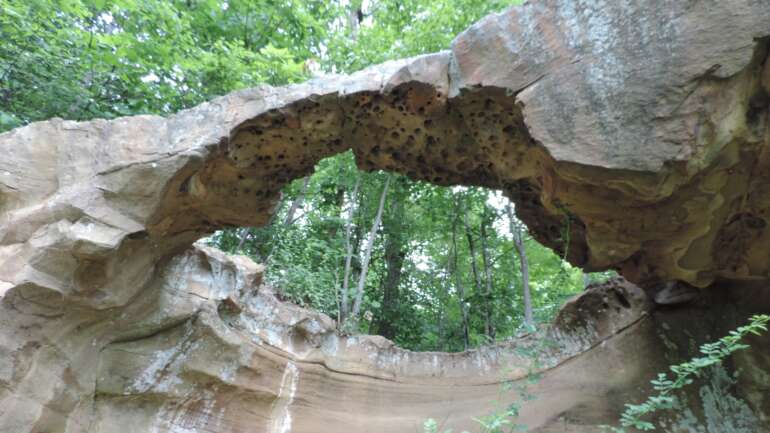
Rockbridge State Nature Preserve | Rockbridge

Home to the natural bridge that gives this region its name, Rockbridge State Nature Preserve features the largest natural bridge in Ohio, which is more than 100 feet long and 10 to 20 feet wide, arching 50 feet across a ravine.
Rock House | Laurelville

Rock House is one of my favorite places to visit while trekking around Hocking Hills. When you see such a colorful and detailed rock formation, it makes it a lot easier to imagine the insane force of water needed to create the beautiful outcroppings and sediment colors.
Honeycomb Rocks Preserve | Rockbridge

Honeycomb Rocks, a 281-acre gem in Hocking County, is home to iconic Hocking Hills scenery with old-growth forests and impressive rock formations. A deep ravine runs through the preserve, carved by a stream that starts near Salt Peter Cave. One big caveat: hiking here is by free permit only. The Arc of Appalachia lets in just six cars a day and the gate stays locked, so apply on their site before you make the drive. And leave the dog at home; they’re not permitted.
Ohio Natural Wonders FAQ
What are the seven natural wonders of Ohio?
There’s no official seven, but if you made us pick: Old Man’s Cave, the glacial grooves on Kelleys Island, Ohio Caverns, Clifton Gorge, Serpent Mound, Brandywine Falls in Cuyahoga Valley National Park, and Blackhand Gorge. Every one of them is on this list, with 26 more worth the drive.
What is the most famous natural wonder in Ohio?
Old Man’s Cave, hands down. It’s the centerpiece of the Hocking Hills and the most-visited spot in the region, with a gorge, waterfalls, and the cave itself packed into one walkable loop. It’s on the list above.
What is the tallest waterfall in Ohio?
Brandywine Falls, which drops about 65 feet inside Cuyahoga Valley National Park. A boardwalk loop takes you right to the overlook, so it’s one of the easiest big payoffs in the state.
Which of these Ohio natural wonders are free to visit?
Most of them. The state nature preserves, the metro parks, and Cuyahoga Valley National Park are all free. The ones worth knowing about before you drive: Ohio Caverns, Seneca Caverns, and Olentangy Caverns charge for tours, Serpent Mound is $8 to park, and Honeycomb Rocks is free but permit-only, with just six cars let in a day.
Does Ohio have caves and caverns you can tour?
Three good ones. Ohio Caverns near West Liberty is the largest and runs tours year round. Seneca Caverns and Olentangy Caverns are both seasonal, roughly spring through fall. All three are on the list above with the details.

.jpg)