Long before he became the first president of the United States, George Washington spent weeks traveling through what would eventually become Ohio, documenting the rivers, forests, wildlife, and fertile land that stretched along the frontier.
In October 1770, Washington set out from Fort Pitt—present-day Pittsburgh—on a surveying expedition down the Ohio River. The trip came nearly two decades before Ohio achieved statehood, and six years before the Declaration of Independence was signed. At the time, the region was still considered the western frontier, a place defined by dense forests, trading routes, and Native American settlements.
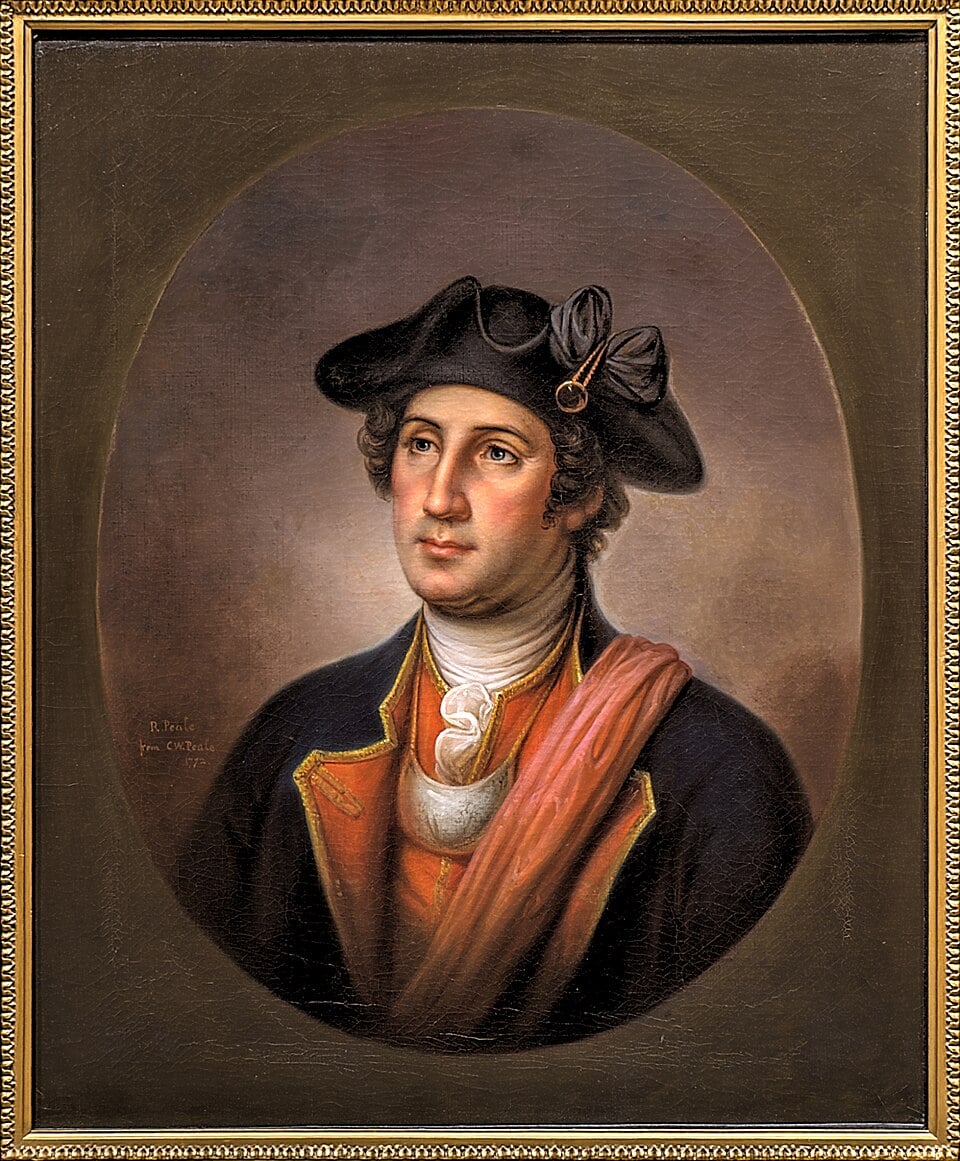
Rembrant Peale, c. 1820 – 1850
Copied from the portrait painted by Charles Wilson Peale in 1772. This romanticized portrait of young George Washington shows him in his Virginia Regiment uniform from the French and Indian War. Washington served as a provincial colonel when he was at Fort Ligonier in 1758. He was with General John Forbes when they took Fort Duquesne.
Washington wasn’t traveling purely out of curiosity. Like many wealthy Virginians of the era, he had a financial interest in western land. As payment for his service during the French and Indian War, Washington had been granted thousands of acres in the Ohio River Valley. The journey gave him an opportunity to inspect that land firsthand and evaluate its future potential.
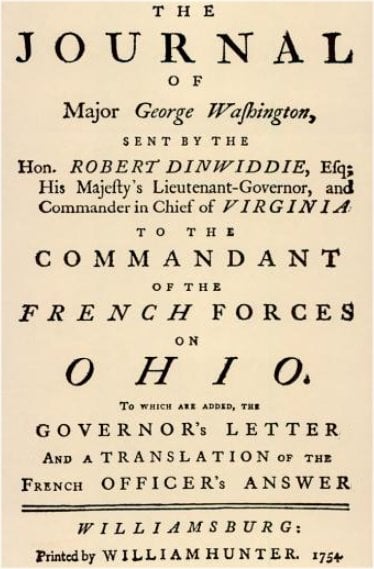
And thankfully for history nerds, he kept detailed notes.
Reading Washington’s diary entries today feels a little surreal.
He describes a version of the Ohio River that barely resembles the industrial corridor we know now. Instead of bridges, power plants, and barges, he writes about endless stretches of untouched forest, buffalo paths, islands covered in trees, and waterways winding through quiet bottomlands.
At one point, while traveling through what is now Washington County, he described the Ohio River as “remarkably crooked,” marveling at long straight stretches of water broken up by islands and steep hillsides.
 Many of the places Washington referenced still exist today, even if they look dramatically different. His route carried him past areas near present-day Marietta, Belpre, Newport, Reno, and the mouth of the Muskingum River. Near modern-day Reno, Ohio, historians believe Washington camped on October 26, 1770, along the banks of the Ohio River near the Little Muskingum River.
That campsite eventually became significant enough to earn its own memorial marker.
In 1932, during nationwide celebrations commemorating the 200th anniversary of Washington’s birth, the Ohio chapters of the National Society Daughters of the American Revolution installed markers throughout the state tracing his journey. Thousands of Ohioans participated in elaborate reenactments of Washington’s river expedition, including a stop at the Reno campsite where crowds reportedly gathered despite heavy rain.
Washington’s observations also unintentionally documented how dramatically Ohio’s landscape would change over the next two centuries. The river he traveled by canoe and flatboat is now shaped by locks and dams. Forested shorelines became industrial hubs. Small waterways he described as remote are now surrounded by highways and towns.
Still, parts of the trip remain recognizable.
The Muskingum River, Little Hocking River, and stretches of the Ohio River near Marietta retain some of the same geography Washington described in 1770. In some areas, especially near protected land and river islands, it’s still possible to glimpse fragments of the landscape he once saw.
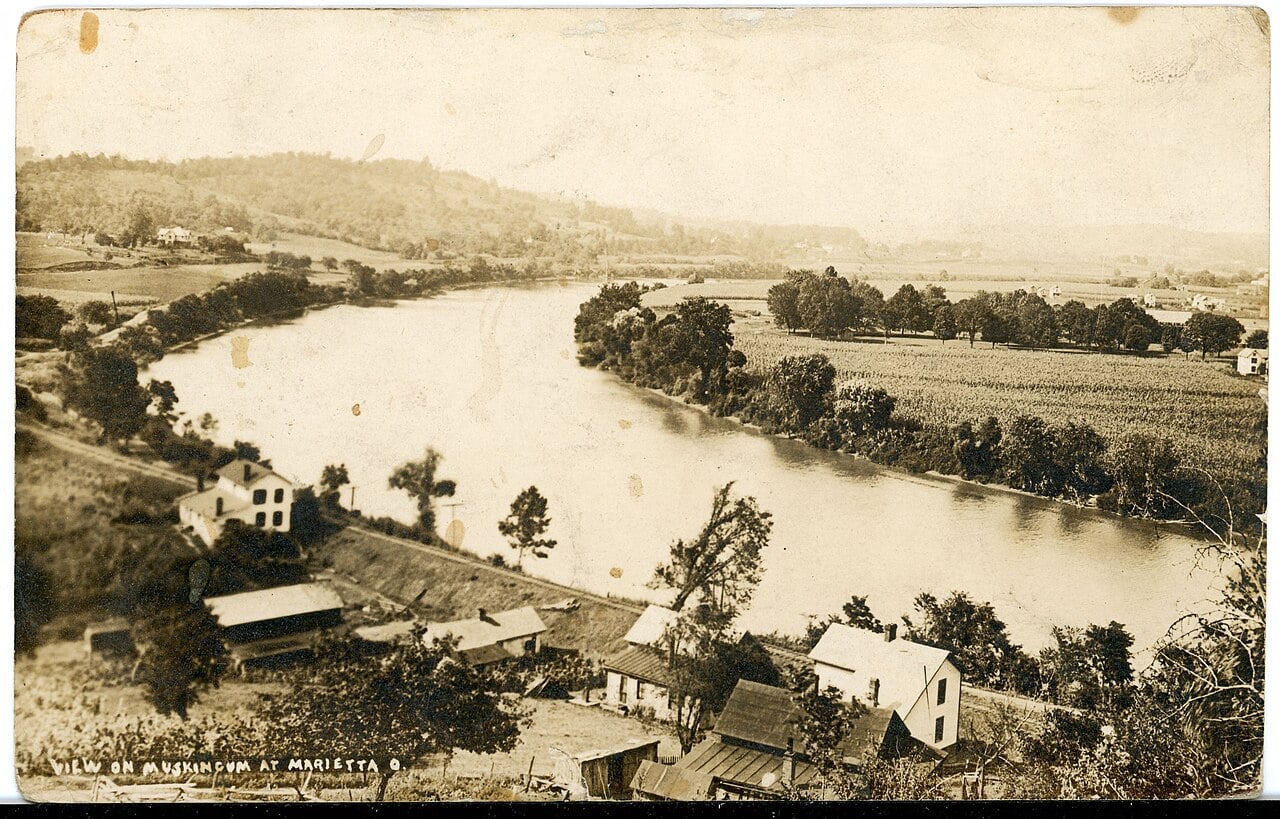
And perhaps most interestingly, Washington seemed genuinely impressed by the region. Years later, after settlement had begun at Marietta, he famously wrote:
“No colony in America was ever settled under such favorable auspices as that which has just commenced at the Muskingum.”
As America approaches its 250th anniversary, Washington’s Ohio expedition offers a snapshot of the region at a pivotal moment in colonial history. Long before Ohio became a state—and long before Washington arrived—the land was already home to Indigenous communities who had lived, traveled, traded, and built cultures here for thousands of years. His diary captures how European settlers viewed the Ohio frontier at the time, and how quickly the region would begin to change in the decades that followed.