Ohio has ten kinds of public land you might reasonably walk into around Columbus, and they all run on different foraging laws. The pawpaw you can pick legally in Wayne National Forest could (technically) earn you a ticket in a Columbus city park. A mushroom that’s fair game in a state forest isn’t meant to leave a nature preserve a half mile away. None of this is posted at the trailhead, and most of it lives in administrative code that nobody reads for fun.
Here’s what you’re allowed to carry out of every category of public land you’ll actually encounter around Columbus, and the specific rule that applies.
| Where | Can you take anything? | The short version |
| State parks | Yes, from a set list | Pine cones on the ground, berries, fruit, tree nuts, mushrooms, and shed antlers. Daylight hours, personal use, and posted signs override everything. ODNR policy adds: stay on the trail, and that’s a hard rule at Hocking Hills, Mohican, John Bryan, and Nelson Kennedy Ledges. |
| State forests | Yes, from a set list | Berries, nuts, fruits, cones, seeds, and mushrooms, as long as the species isn’t endangered or threatened. No digging and no wildflowers. Wilderness areas, seed orchards, nature preserves inside the forest, and anywhere posted are off limits. |
| State wildlife areas | Yes, a shorter list | Berries, nuts, and mushrooms, plus naturally shed antlers picked up in daylight. Everything else stays where it is. |
| Wayne National Forest | Yes, the most generous | Small amounts of fruit, pine cones, mushrooms, and similar forest products are free for personal use. Roots are the exception: ginseng and six medicinal plants need permits, and ramps have no permit at all. |
| Army Corps reservoirs | Not without permission | Federal rule bans removing “vegetative growth” without the district commander’s written permission. Dead wood on the ground for a campfire in a designated recreation area is the exception. ODNR leases parts of these lakes and runs them as state parks, and the state park rules apply there instead. |
| National parks and wildlife refuges | Almost never | Park Service land bans taking plants unless a superintendent has designated specific fruits, berries, or nuts for hand picking, published in that park’s compendium. Refuges prohibit collecting any plant or animal without a special permit. |
| State nature preserves | No | Collecting anything is prohibited, down to rocks and soil, and you can’t leave the trail. |
| Columbus and Franklin County Metro Parks | Almost never | Foraging is banned except leaves, mushrooms, fruits, and seeds in picnic areas and mowed lawns. One woods exception: mushrooms in the Public Hunting Area at Battelle Darby Creek, March 1 through August 31. |
| Columbus city parks | No | City code bans collecting any vegetation or parts thereof, a strict liability offense with a fine up to $100. Digging also breaks the rule against altering terrain, which carries up to $750 and 90 days in jail. |
| Suburban city and county park districts | Depends on the system | Each one writes its own rules under state law, and there’s no statewide default. Assume no and check that system’s rule book. |
That was the quick and dirty, now here are the details.
Ohio state parks
State parks are more generous than most people assume. The parks rule, OAC 1501:46-3-10, spells out exactly what you can carry away: pine cones on the ground, berries, fruit, tree nuts, mushrooms, and naturally shed antlers. Daylight hours and personal use only are the rule, and never from an area where a restriction is posted.
Everything not on that list stays. The same rule makes it illegal to pick or dig up any other part of a plant, or to carry it off, and its list of examples runs from flowers all the way down to leaf mold and dead wood.
Search this and you’ll turn up an ODNR page headed Collecting Permit, and a rule, OAC 1501:46-3-27, that says nobody may collect plants, animals, fungi, or geologic materials from a state park without one. That’s the research permit. Its application wants your project outline and objectives, your qualifications or a sponsoring university, the equipment and method, the species and the amount, and where the specimens will end up, and the division can ask for a data sheet after it expires. Rule 1501:46-3-10 is the one to look for allowances, and it asks you for nothing. Its own permit language points the same way: the exception it carves out is for scientific or educational purposes.
There’s one more catch: stay on the trail while you collect. ODNR’s guidance puts it flatly, saying that on state park land “collectors must remain on the trail” and that “off-trail collecting is prohibited.” The code itself is narrower, but where it applies it has teeth. OAC 1501:46-3-30, titled “Off-trail use prohibited,” bans leaving the posted trails at Hocking Hills, Mohican, John Bryan, and Nelson Kennedy Ledges state parks, plus any area the chief designates, without written permission from the chief. Campgrounds, picnic areas, hunting areas, and rock-climbing areas are excepted. Those four parks are the ones central Ohio foragers drive to most. Stepping off a posted trail there is a violation on its own, whether or not you pick anything. At other state parks no code rule bans leaving the trail, though ODNR still asks you to stay on it. Individual parks can add their own restrictions. If berries are what you’re after, Columbus Navigator’s guide to fall fruit foraging in Ohio covers what ripens when.
Ohio state forests
State forests run under a different ODNR division with their own rule, and the allowed list is close to the parks list without matching it. Under OAC 1501:3-2-06, you can gather and remove berries, nuts, fruits, cones, seeds, and mushrooms, as long as the species isn’t endangered or threatened. Seeds are on the forest list but not the parks list, while shed antlers appear only in the parks rule.
There are six exceptions: seed orchards, seed collection areas, seed production areas, areas designated as wilderness, dedicated nature preserves inside forest boundaries, and any other area ODNR designates or posts. “Designated” doesn’t necessarily mean posted, either. Under the forestry definitions rule, OAC 1501:3-1-01, an area counts as designated if the chief identified it by rule, on an official map kept at the chief’s office, or with on-site signs. A trailhead with no signage settles nothing, so check the forest’s map before you fill a bag. Digging is prohibited everywhere in the system. A separate forestry rule bans cutting, removing, or damaging any tree, shrub, or plant, and it names wildflower picking specifically. The rule’s only written exceptions are the berry-and-mushroom list above and licensed hunting or fishing, so there’s no permission to apply for on plants. Written permission from the chief is a path for digging or removing rock, sand, gravel, or other minerals, not for plants. The same sentence also bars harassing or collecting any native wild animal in a state forest unless you’re licensed hunting or fishing, which is worth remembering when you get to bait.
State wildlife areas
Wildlife areas are hunting and fishing land first, so the collecting allowance is short. The rule, OAC 1501:31-9-01, bans removing just about everything from the property, then carves out “the picking of berries, nuts or mushrooms” and “picking up naturally shed deer antlers during the daylight hours.” The list ends there, and it’s shorter than the parks one. Pine cones and seeds didn’t make it, and neither did fruit that isn’t a berry.
Wayne National Forest
Ohio’s only national forest is the most forager-friendly public land in the state, and it’s federal, so the ODNR rules above don’t apply there. Ohio’s own plant laws still do, including the ginseng season and the endangered-plant list. The Forest Service’s position, straight from the Wayne’s permits page: “You do not need a permit to collect small amounts of forest products such as fruits (blackberries, pawpaws, etc.), pinecones, mushrooms, or rose hips for personal use.” That’s the closest thing Ohio has to an open invitation. Wild pawpaws drop across southeast Ohio in September, and the Wayne is the rare public land where taking a bagful home is unambiguous.
The rules tighten at roots. Ginseng needs the Wayne’s own $20 permit, covered below. Six other medicinal roots need a $20 product permit too: black cohosh, blue cohosh, goldenseal, bloodroot, snakeroot, and wild ginger. The forest’s plan requires a permit for any special forest product outside berries, nuts, and pine cones, so there’s nothing to buy that would make digging them legal.
You may have heard Wayne is becoming Buckeye National Forest. The rename was proposed in 2023 but still hasn’t happened.
Army Corps reservoirs
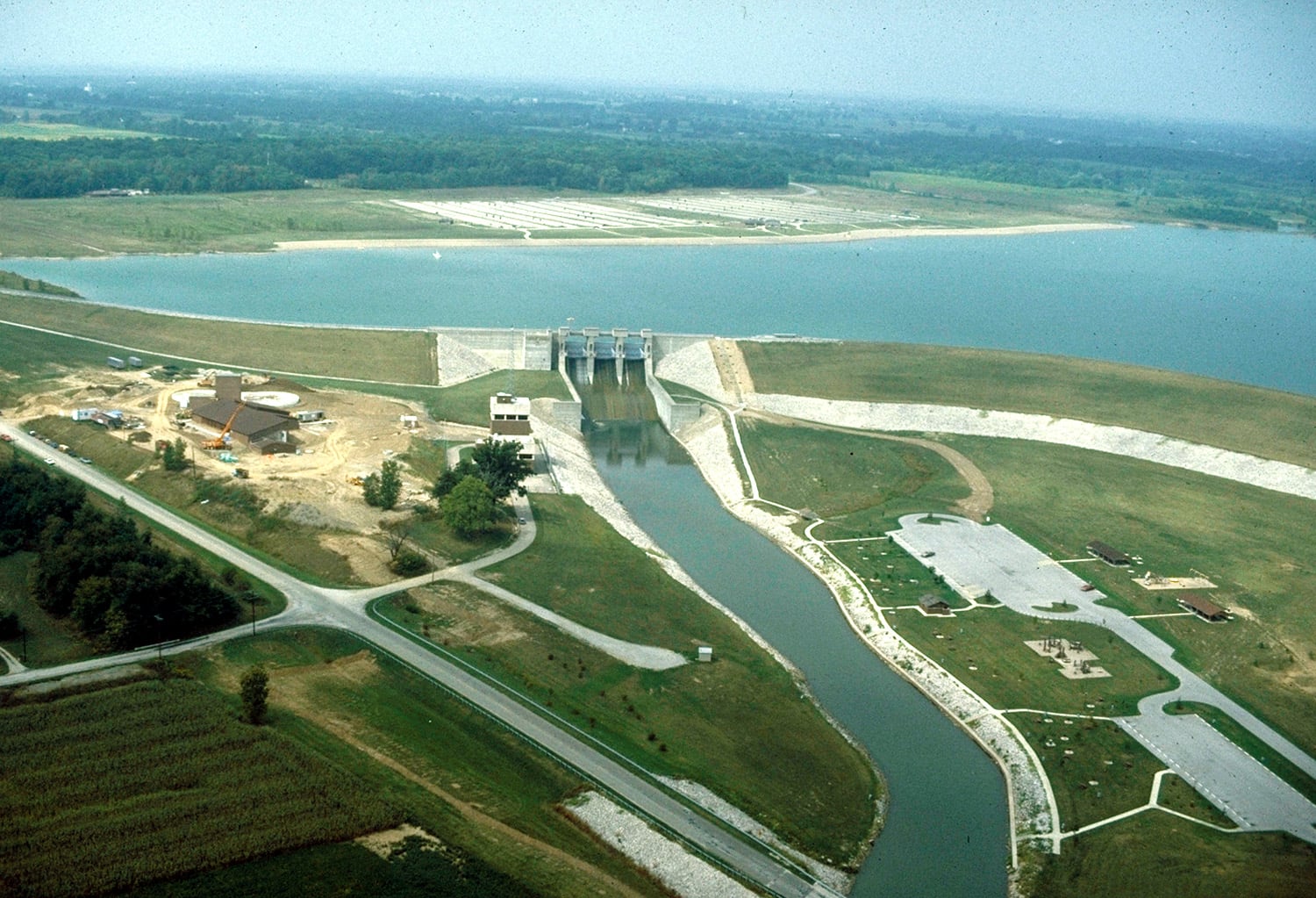
Some of the biggest lakes within an easy drive of Columbus sit on land the U.S. Army Corps of Engineers owns, and the Corps is stingier than the Forest Service. The federal rule, 36 CFR 327.14, prohibits the “destruction, injury, defacement, removal or any alteration of public property,” and its own list of what that covers ends with “vegetative growth.” Nothing is carved out for berries the way the state rules carve them out. Wood is the one place the Corps loosens up. Gathering dead wood off the ground to burn as firewood in a designated recreation area is allowed unless the district commander posts otherwise, which is more than a state park allows.
ODNR complicates this by leasing big pieces of these lakes and running them as state parks. The state park list applies on the leased ground and the federal rule applies on the rest, and no sign necessarily shows you where one becomes the other. The lake office can tell you which side you’re on.
National parks and wildlife refuges
The Wayne is generous, and it’s easy to read that as a federal rule, but that’s not always the case. On National Park Service land, 36 CFR 2.1 bans “possessing, destroying, injuring, defacing, removing, digging, or disturbing from its natural state” any plants or their parts or products. The one opening runs backward from the state rules: a superintendent “may designate certain fruits, berries, nuts, or unoccupied seashells which may be gathered by hand for personal use or consumption.” If a park hasn’t designated anything, nothing may be picked. Each park publishes its designations in a document called the superintendent’s compendium. Firewood gets its own ban with the same structure, so gathering wood for a campfire is illegal unless that park has said otherwise.
National wildlife refuge rules are shorter still. 50 CFR 27.51 prohibits “collecting or attempting to disturb, injure, spear, poison, destroy or collect any plant or animal on any national wildlife refuge” without a special permit, which puts a refuge in the same category as a state nature preserve.
State nature preserves
Nature preserves can be confusing. They often share a border and even a parking lot with a state park, and yet the rules are often different. OAC 1501:17-3-02 prohibits collecting or disturbing anything in a preserve. The rule’s own list covers ice, soil, sand, gravel, rocks, fossils, minerals, plants, plant materials, animals, “or any other substance.” There’s no mushroom exception and no berry exception. A separate visitation rule, OAC 1501:17-1-03, limits you to the areas and facilities provided for general public use, and where a trail or trail system exists you have to stay on it unless the chief of the division has given you written permission.
The visitation rule has a second clause worth knowing. Some Ohio preserves are open by access permit only, so you need written permission from the chief of the division before you set foot on the property. You have to carry the permit and show it on request. On that land, entering without one is already a violation, so what you might have picked never enters into it.
If you can’t tell which one you’re standing in, assume preserve rules until a sign tells you otherwise.
Columbus and Franklin County Metro Parks
Metro Parks, the system most central Ohio residents actually walk in every week, bans foraging almost entirely. The official policy prohibits foraging, collection, or removal of any plant, mineral, or live material anywhere in the system, with one carve-out: leaves, mushrooms, fruits, and seeds in “general picnic areas and other regularly mowed surfaces.” In practice that means mowed lawns rather than woods. The rule keys on the surface underfoot rather than on trail status, so the woods and meadows a path runs through are off limits, and so is everything alongside it. A few Metro Parks trails are themselves mowed grass through meadow, which arguably falls inside that wording, but Metro Parks publishes no trail-specific exception and no trail-specific ban. Until Metro Parks says otherwise, assume the ban covers the trail you’re on.
One exception lives in actual woods: mushroom hunting is allowed in the Public Hunting Area at Battelle Darby Creek Metro Park, and only from March 1 through August 31. That window exists mostly for morel season, and our separate guide to morel foraging in Ohio covers how that works.
Columbus city parks
The strictest land on this list is the city’s own. Columbus City Code 919.09 makes it illegal to gather, collect, or take possession of any “vegetation, flowers, trees or parts thereof” in any city park. That covers everything from mulberries to black walnuts. That clause, 919.09(C), is also a strict liability offense, meaning intent doesn’t matter, and it carries a fine of up to $100 as a minor misdemeanor.
Mushrooms occupy a gray area in the city code. Fungi aren’t vegetation, and the word mushroom never appears in the Columbus City Code in any park context. But 25 pieces of city parkland carry a separate Nature Preserve designation under Section 919.27, which bans the collection, removal, or other disturbance of ice, soil, sand, gravel, rocks, fossils, minerals, trees, plant materials, animals, or any other natural substance, and separately bans leaving the approved trail. That language is broad enough to cover a mushroom, and the designated list includes wooded ground worth hunting. Everywhere else in the city system the code says nothing about fungi, though 919.09(D) bans altering or rearranging any natural habitat or terrain, and that clause isn’t in the $100 tier: under 919.99(D) it’s a misdemeanor of the second degree, up to $750 and up to 90 days in jail. The city publishes no foraging exception anywhere. Treat every Columbus Recreation and Parks property as a no. Plenty of state park and state forest land sits within an hour of downtown, though.
Suburban parks and the land this list doesn’t cover
Metro Parks isn’t the only local system, and none of its rules travel to the others. Ohio’s park districts write their own under ORC 1545.09, which directs each board of park commissioners to adopt bylaws for its own properties and makes breaking one an offense. Every suburb does the same thing through city ordinance, so there’s no statewide default to lean on.
Plenty of green space in central Ohio belongs to none of these categories at all. School and university grounds, cemeteries, city water and reservoir property, roadsides and highway rights of way, and preserves owned by land trusts and conservancies each answer to a specific owner with its own rules and its own person to call.
The special cases
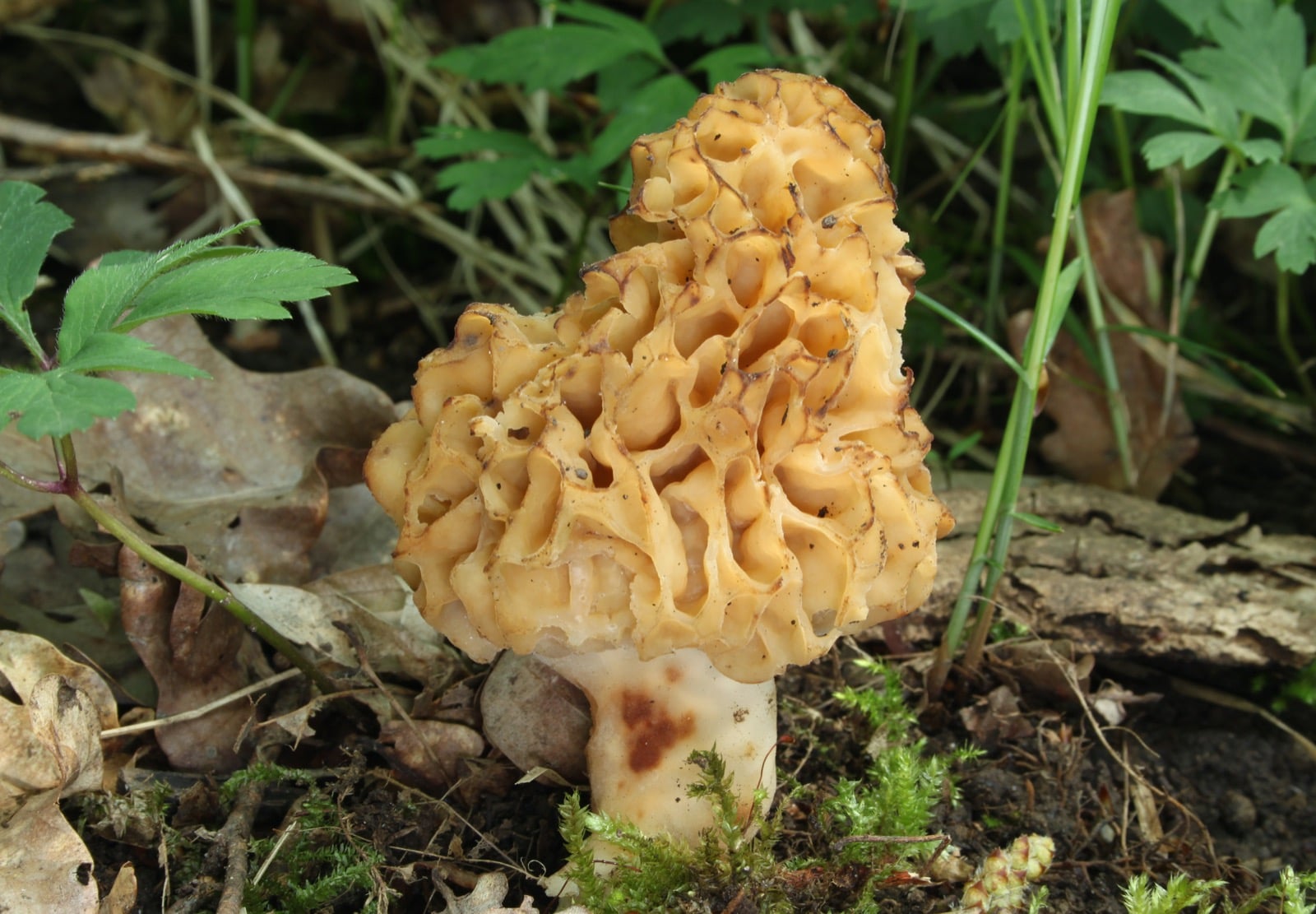
Some things you might carry out of the woods come with their own laws stacked on top of the land rules. These come up the most.
Ohio ginseng laws
Wild American ginseng is the most regulated plant in the Ohio woods, because dried roots sell for hundreds of dollars a pound and poaching is a real industry. The state treats it accordingly, and the Division of Wildlife, not Forestry, runs the program. Ohio doesn’t sell or require a ginseng permit, though. What the state requires is written permission from whoever owns the ground you’re digging on. The $20 permit below is the Wayne’s, it’s federal, and it’s good only on Wayne National Forest land.
| Ohio Wild Ginseng at a Glance | |
| State permit | None. Ohio doesn’t sell or require a permit to dig wild ginseng. |
| Season | September 1 through December 31 |
| State land | Illegal on all state-owned land: parks, forests, wildlife areas, and preserves. Also illegal on national park property. |
| Wayne National Forest | Legal with a $20 permit, sold per unit at Wayne offices during the season |
| Private land | Legal with the landowner’s written permission, which you have to carry with you |
| What you can dig | Mature plants with at least three leaf prongs, and ripe berries if the plant has any. Green berries mean it’s illegal to dig, prongs or not. Replant the seeds where you dug. |
| Selling it | You don’t need a permit to sell what you dug. The buyer does, if they’re buying for resale or export: a free Ginseng Dealer Permit from the Division of Wildlife. Any buyer must check your ID and keep records. Export requires state certification, at $3 per pound. |
The season is September 1 through December 31. Digging it on any state-owned land is prohibited, full stop; ODNR’s own ginseng publication says so in one sentence. Wayne National Forest is the public-land exception, and it’s an explicit one: a $20 permit, sold separately for each of the forest’s three units (Athens, Ironton, and Marietta), valid only during the season, and not usable in a unit other than the one you bought it for. The ginseng rules stop there. They say nothing about county or municipal land, so that ground isn’t closed by the ginseng program itself. Around Columbus it’s closed anyway, because Metro Parks and Columbus city parks both ban collecting outright. Beyond that you’re on private land, and on any property, public or private, Ohio requires written permission from the landowner or their agent that you carry while you dig and show to any wildlife officer who asks.
The harvest rules travel with you. The plant has to be mature and carrying at least three leaf prongs, and any berries on it have to be ripe before you dig. Green berries mean you leave the plant, however many prongs it has, and in the first weeks of September the fruit usually hasn’t turned crimson yet. When you dig a plant that passes all three tests, the seeds go back in the ground right where you dug. You’re also required to keep daily records, by county, of every root you dig across the September-through-December season.
Shed hunting and deadheads on Ohio public land
Whitetail sheds are legal to pick up on more public land than people may think, but the map is patchy. State parks allow it by name, daylight hours and personal use only. Wildlife areas allow it in daylight too. State forests are the odd one out. No forestry rule mentions antlers at all: the removal ban at OAC 1501:3-2-05 reaches trees, plants, wildflowers, wild animals, and rock, and a cast antler is none of those. But ODNR’s own published rules for every state forest are narrower than the code, and they say disturbing any property or material is prohibited and that berries, nuts, and mushrooms are what may be gathered and removed. Antlers aren’t on that list, so treat state forests as a no. Nature preserves are a flat no. The Wayne’s free personal-use list doesn’t mention antlers and doesn’t need to. Forest Service policy defines the special forest products that permits cover and expressly excludes animal parts, so a shed sits outside the permit system entirely. None of the Wayne’s standing forest orders restricts picking one up either.
A skull with antlers still attached counts as part of a deer, and keeping one requires a certificate of ownership or a receipt from a wildlife officer or other law enforcement; Ohio’s hunting regulations draw that line. A clean shed needs no paperwork at all, on the Wayne or anywhere else.
Feathers
A feather lying on the trail looks like the most harmless thing you could pocket, but it’s covered by two laws at once. 50 CFR 21.10 bans possessing “any migratory bird, or the parts, nests, or eggs of such bird” without a federal permit, and a shed feather is a part. Ohio has its own version: ORC 1533.07 makes it illegal to have in your possession “any part of the plumage, skin, or body of any bird other than a game bird.” Both apply even when the bird dropped the feather on its own.
Game birds are the exception, so a turkey feather is legal to possess where a blue jay’s isn’t. On public land it makes little practical difference, because feathers aren’t on the allowed list in any category above; the land rules already rule them out before 50 CFR 21.10 or ORC 1533.07 ever comes into play.
Firewood
Nothing in this article is more locked down than wood. In state parks it’s flatly illegal to gather firewood or run a chainsaw, with a few rare exceptions. The park can supply wood when the chief decides forest management or storm damage has left an abundance of timber. You can gather fallen small limbs and twigs for kindling, but only to burn on the area where you picked them up. And with the chief’s written permission, a person may cut and gather hazard trees or timber that has already fallen, the only one of the three the rule doesn’t tie to burning the wood on site. Without that written permission, taking wood home from a state park is illegal, dead or not.
State forests split wood into two kinds, and the dividing line is cutting versus picking up. Cutting firewood takes a paid permit from the forest office, issued for dead and downed trees along marked forest roads when wood is available; Maumee State Forest, for one, charges $25 for a daily permit. Gathering at camp is looser: ODNR’s own Shawnee State Forest page tells campers that small branches and limbs in the woods around the camp are permitted, no permit and no fee. That allowance covers the fire ring you’re sitting at, because the forestry code’s take-home list has no wood on it. Call the forest office first, because availability and local rules both move around with storm cleanup.
Wayne National Forest sells a $20 personal-use permit, one per person per year, good for up to four hundred cubic feet of wood, which the Forest Service calls roughly five standard cords. It covers dead and down wood only, and it comes with a map of the areas where you’re allowed to cut. You can’t buy it online: you have to be 18, and the Forest Service sells it in person at a Wayne office. Cut pieces can’t be longer than three feet. If you’re camping there, you can gather small amounts for your own campfire without a permit, but the wood has to be already dead and down, no standing tree of any size may be cut whether it’s dead or alive, and none of it leaves the Wayne with you.
Rocks, fossils and creek stones
Ohio’s default answer on rocks is no, but there are exceptions. State parks prohibit removing earth, sand, gravel, minerals, stone, or rocks, and the rule covers cave features and lakeshores too, but the same sentence ends in two exceptions: specific areas where the chief’s authorization to collect fossils or other geological materials is posted at the area headquarters, and areas the chief has designated for nature study. ODNR uses that opening, and its own park pages send fossil collectors to a handful of parks sitting on rich beds. State forests ban removing any rock or mineral without written permission, and a second rule covers anything of paleontological or geological interest, so fossils are included. Nature preserves ban it all outright. Metro Parks allows rock or mineral removal only by special permit, and Columbus city code protects “natural formations” and “mineral deposits” in city parks, while the city’s own nature preserves ban collecting rocks, soil, and fossils outright under 919.27.
Creek beds follow the same logic. In Ohio, the water in a stream is public, but the land under it belongs to whoever owns the banks. Inside a park, that’s the park, so the park’s rules apply to the creek bed too. Nobody will bother you over a skipped stone, but filling a bucket with creek rock for the garden breaks the same removal rule.
Federal land is looser still. The Forest Service allows casual collecting of common invertebrate and plant fossils on national forests, and the limit runs two ways: twenty-five pounds a day, and no more than one hundred pounds in a calendar year. You can work the surface or use small nonpowered hand tools, and you can dig a little as long as the disturbance stays negligible. In practice a rock hammer or trowel qualifies, and a full-size shovel or pick axe doesn’t. Nothing you pick up can be sold. Vertebrate fossils are off limits everywhere without a research permit. The Forest Service publishes nothing Wayne-specific on rockhounding, so call a district office before you haul anything out.
Arrowheads and artifacts
Surface hunting for points is an old Ohio habit, but, technically, public land is the wrong place for it. On national forest ground the Forest Service rule is blunt: 36 CFR 261.9 prohibits removing any prehistoric, historic, or archaeological artifact, and a neighboring clause covers digging for one. You’ll also see the Archaeological Resources Protection Act cited on this, and it’s worth knowing what that law actually does. 16 U.S.C. 470ee bars removing any archaeological resource from public land without a permit, then exempts “the removal of arrowheads located on the surface of the ground” from the statute’s criminal penalties. Collectors quote that exemption a lot, but it may be narrower than they believe.
State land runs on its own statutes. The park rock rule above never says the word artifact, and that omission is why a find in a creek bed feels like fair game. Working a point loose means moving soil, which the state park and forest rules prohibit on their own terms, and in a preserve even a surface find is covered by that rule’s “any other substance” language. On top of all of it, ORC 149.54 makes it a second-degree misdemeanor to do “archaeological survey or salvage work” on any land “owned, controlled, or administered by the state or any political subdivision” without written permission from the director of the Ohio History Connection.
Ramps, sap, wildflowers, and anything you’d cut or dig
Every allowance above shares one trait: berries, nuts, fruit, and mushrooms all grow or fall above ground. Nothing that requires a trowel is legal anywhere on state land. Ramps come out bulb and all, so digging them in a state park, forest, wildlife area, or preserve is prohibited, and picking wildflowers is banned by name in both the parks and forestry rules.
The Wayne is a no on ramps too. Standard SFW-VEG-18 requires a permit to collect any special forest product for personal use and exempts only berries, nuts, and pine cones. Bulbs and roots are special forest products by definition, and the only plant-collecting permit the Wayne sells covers six medicinal species that don’t include ramps. If you want ramps, private land with the owner’s permission is the answer.
Sap passes the above-ground test but still isn’t legal. Tapping a maple means drilling into a living tree, which runs into the parks rule against carrying off any other part of a plant and the forestry rule against cutting or removing a tree without written permission. Sap isn’t on the Wayne’s free list either, so a central Ohio sugaring season starts with a backyard maple or a private landowner’s permission.
Ohio’s endangered-plant statute reaches further still. On every category of public land in this article, taking a listed plant is off the table. The list ODNR publishes runs long. ORC 1518.02 makes it illegal to willfully root up, injure, destroy, remove, or carry away a listed endangered or threatened plant along public highways, on public property, in the waters of the state, or on land you don’t own without the owner’s written permission; your own land sits outside the statute, and a violation is a minor misdemeanor.
Bait, frogs and turtles
Bait has its own rulebook, and it runs on two layers that have to be read together. The Division of Wildlife’s rule, OAC 1501:31-13-04, lets anyone take minnows, crayfish, hellgrammites, and other larval aquatic insects, excluding endangered species, “from any waters in the state of Ohio at any time and in any number.” The numbers in the rule are possession limits, not catch limits: without a bait dealer’s permit you can’t have more than 100 crayfish, or 500 in the aggregate of the listed bait species. Hellgrammites, other larval aquatic insects, smelt, and preserved minnows are written out of that 500 by name.
Minnows come with an extra layer, because a statute sits on top of that rule and the rule defers to it in so many words. Under ORC 1533.02, every Ohio water except Lake Erie and its named bays is the “inland fishing district,” which means the Scioto, the Olentangy, Alum Creek, Big Darby, and every Columbus-area reservoir. And in that district, ORC 1533.57 says no one but a licensed bait dealer may possess more than one hundred minnows. The same statute limits you to a minnow seine no more than four feet deep and eight feet long, and closes minnow seining from May 1 through June 14, except on streams whose average width is twelve feet or less for fifty yards above and below where you’re working.
Night collecting is restricted but not closed. From 9 p.m. to 4 a.m. you may take crayfish and larval aquatic insects only by trapping, angling, or hand picking, so working a creek with a headlamp and picking crayfish by hand stays legal after dark, while netting and seining shut down at 9. The license requirement is easy to overlook. Ohio defines fishing as taking fish by any method, and a minnow is a fish. ODNR’s own bait digest says a valid Ohio fishing license is required of any collector, so you need one in hand before you dip a net, the same as you would to cast a line. The usual exemptions still apply: anyone under 16, and anyone working water on land they or their parents own. And don’t sell any of it without a bait dealer’s permit.
Frogs and turtles aren’t bait, and they come with seasons the bait rule doesn’t. Under OAC 1501:31-25-04, you can’t take bullfrogs or green frogs from May 1 through 6 p.m. on the second Friday of June, and once the season opens the cap is fifteen a day across both species combined. Snapping turtles and softshell turtles are closed January 1 through the last day of June, and anything you keep has to measure at least eleven inches straight across the shell. Those seasons run statewide, and the land rule stacks on top, so an open season doesn’t override the rules of the land you’re standing on.
Locally, Metro Parks allows fishing but bans collecting any animal, so buy your minnows before you get there. And since digging worms means digging soil, which the state park and preserve rules prohibit, dig your worms at home before you head for Alum Creek.
The rules that follow you everywhere
Daylight hours and personal use only get repeated as if they applied on all public land, but they come from the state parks rule and bind you in a state park. The state forest rule says neither, and forests close at 11 p.m. rather than at dusk; Hocking State Forest, along with the target ranges and all-purpose vehicle areas, closes a half hour after sunset. In wildlife areas daylight attaches to shed antlers and litter, not to berries, nuts, or mushrooms; what governs your hours there is a curfew barring anyone who isn’t hunting, fishing, or trapping from the property between 8 p.m. and 6 a.m. from September 1 to May 1, and between 10 p.m. and 6 a.m. from May 2 through August 31. Selling is out everywhere, though the rule that says so changes with the land: the parks rule says personal use only in so many words, while separate rules bar selling or possessing with intent to sell on forest and wildlife area land. One thing holds everywhere: a posted sign beats anything written here or in the code. And while no state rule sets a pound limit, quantity is what draws attention; show up with commercial quantities and you’ll have a hard conversation with an officer.
When you can’t tell what kind of land you’re on, check the sign at the trailhead or look the property up on ODNR’s site. The managing division decides your rules, and two minutes of checking beats a misdemeanor.
Ohio foraging law FAQ
Is foraging legal in Ohio?
Yes. No permit is needed for berries, fruit, nuts, or mushrooms in Ohio’s state parks, state forests, wildlife areas, or Wayne National Forest. State parks add pine cones and shed antlers, and state forests add seeds. State nature preserves allow nothing. Metro Parks and Columbus city parks are effectively off limits.
Can you forage in Ohio state parks?
Yes. Pine cones on the ground, berries, fruit, tree nuts, mushrooms, and naturally shed antlers can all be carried away in daylight for personal use, unless an area is posted otherwise. Stay on the trail while you do it. ODNR says collectors must remain on the trail on state park land and that off-trail collecting is prohibited. At Hocking Hills, Mohican, John Bryan, and Nelson Kennedy Ledges, OAC 1501:46-3-30 separately bars leaving the posted trails without written permission from the chief, outside developed areas like campgrounds and picnic areas. Individual parks can add their own restrictions, so call the park office if you’re unsure.
Is there a limit on how much you can forage in Ohio?
The state sets no pound limit on public land. The working cap is personal use, and daylight hours apply only in state parks: state forests are open until 11 p.m., and the wildlife area daylight clause covers shed antlers, not berries. Wayne National Forest uses “small amounts” for its free products. Bait is the exception with hard numbers, and they’re possession limits: 100 crayfish, 500 in the aggregate of the listed bait species, and just 100 minnows anywhere in the inland fishing district, which is every water in central Ohio.
Can you sell what you forage from public land?
No. The state park rule limits taking to personal use, and the Wayne says personal use for its free list. The forest and wildlife area rules don’t use that phrase, but selling counts as commercial collecting and needs a permit everywhere. Ginseng is its own regulated market with permitted dealers and state certification, and it can’t come off state land at all.
Can you take rocks or fossils from Ohio state parks?
Mostly no, but not everywhere. The state parks rule bans removing rocks, minerals, fossils, and even sand, then carves out specific areas where ODNR posts collecting authorization at the area headquarters, and a few parks are posted that way, so ask at the park office before you assume. State forests and wildlife areas need written permission from the chief, and nature preserves are a flat no. Federal land is looser: the Forest Service allows casual collecting of common invertebrate and plant fossils on national forests, off the surface or with small nonpowered hand tools, up to twenty-five pounds a day and one hundred pounds a year, for personal use you can’t sell.
Do you need a permit to forage in Ohio?
You don’t need a permit for the everyday list of berries, nuts, and mushrooms in state parks, state forests, wildlife areas, or Wayne National Forest. Metro Parks and Columbus city parks are a different situation: there’s no permit to get, because Metro Parks bans foraging nearly everywhere and city code bans it outright. The ODNR collecting permit you’ll find online is a research permit, OAC 1501:46-3-27, not a license for a bag of morels. Permits do apply to ginseng on the Wayne, to the six medicinal roots there, to firewood anywhere that carrying it home is allowed at all, and to commercial or scientific collecting. ODNR issues special activity permits for “special events, research, and collecting at state parks, forests and nature preserves,” along with the access permits restricted preserves require.
It all comes down to one habit: know whose land you’re on before you pick anything. Everything else in this article follows from the category on that trailhead sign.