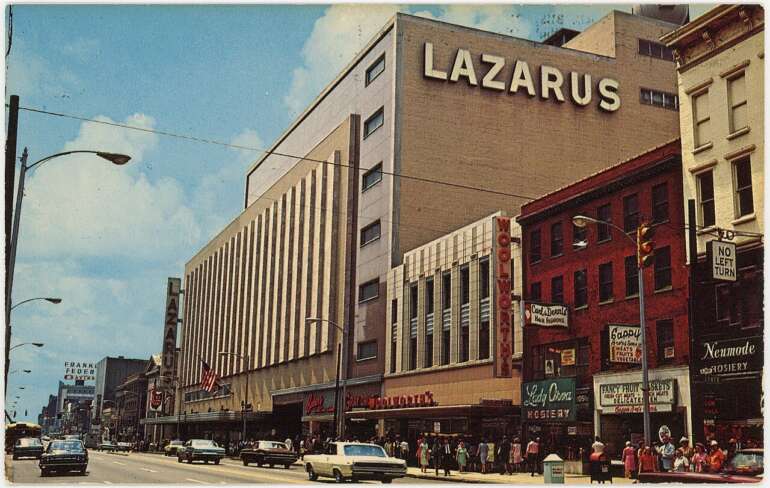
Before suspended sculptures and street festivals filled the intersection, Gay and High was simply the center of everything. Retail, banking, streetcars, parades. If something was happening in Columbus, it probably passed through that corner.
Then, in February 1977, it caught fire.
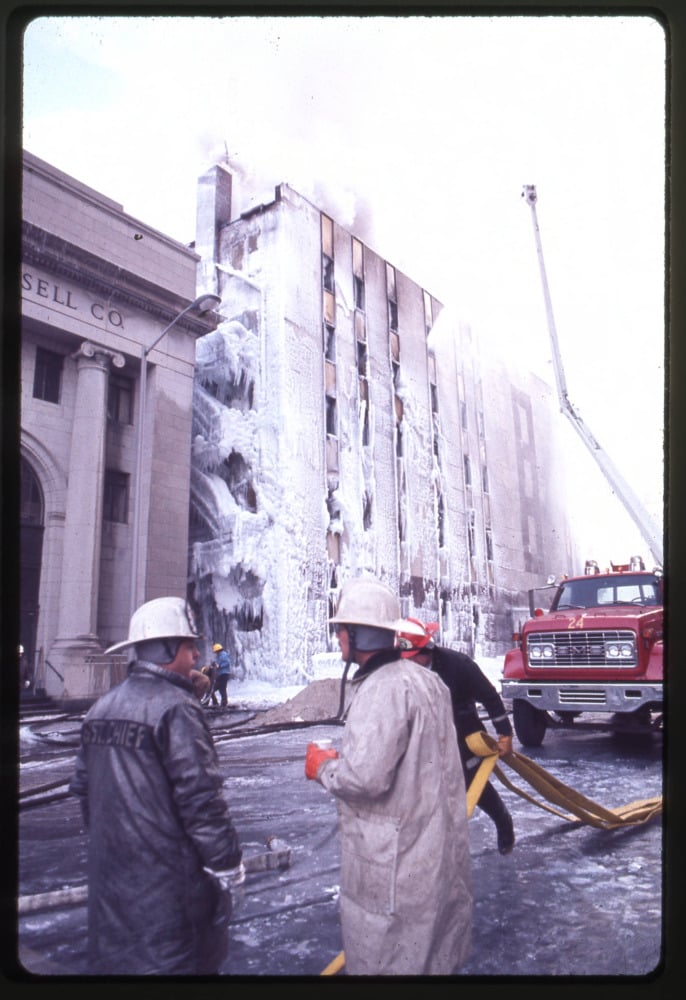
On a bitterly cold night with temperatures hovering around 9 degrees, a blaze broke out in the basement of K’s Down Under Bar at 6 West Gay Street. What started below street level quickly spread to nearby buildings, including the Lerner Shops at 75 North High Street, the Mary Jane Shoe Store, Donna’s Continental Wigs, and Kings Discount Drugs.
By the time firefighters gained control, the four alarm fire had destroyed a quarter of a city block and caused an estimated $2 to $2.5 million in damage.
And then the city froze.
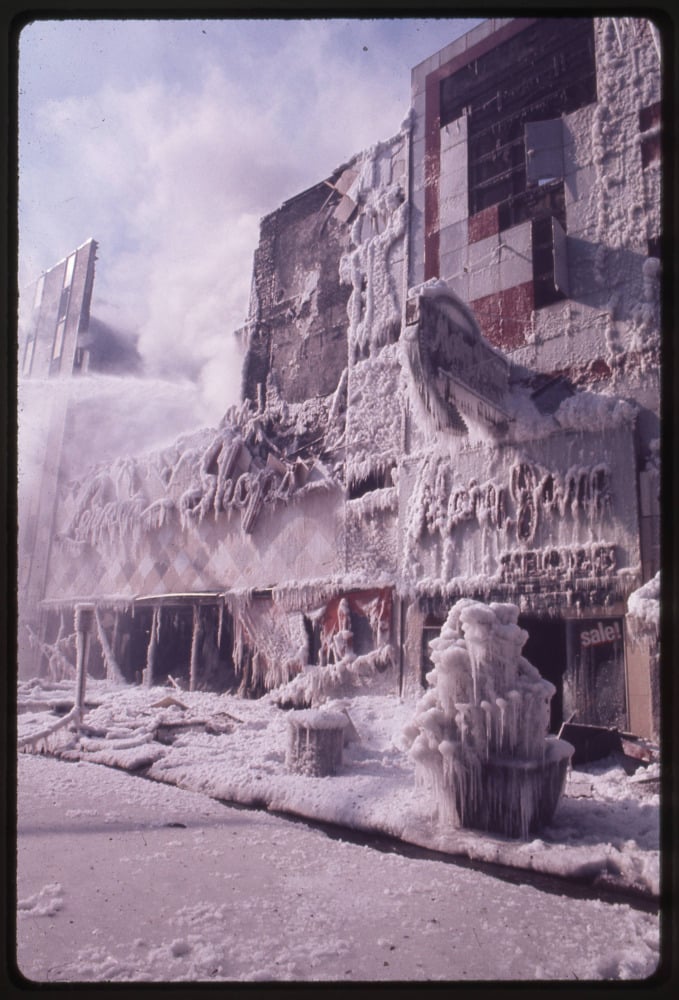
As crews battled the flames, water poured across brick facades and storefront windows. In the single digit temperatures, it turned to thick sheets of ice. Ladders, fire escapes, awnings, and entire building fronts became encased. Photographs from that night show firefighters dwarfed by walls of flame and ice, their coats stiff in the cold, steam rising into the dark sky above High Street.
One image captures two firefighters standing in front of a building glazed in ice, the words “Asst. Chief” visible across the back of one jacket. Another shows fire trucks lined along Gay and High, hoses stretched across streets that look more like a skating rink than a downtown intersection.
The blaze began with a reported gas leak and moved quickly through the interconnected structures.
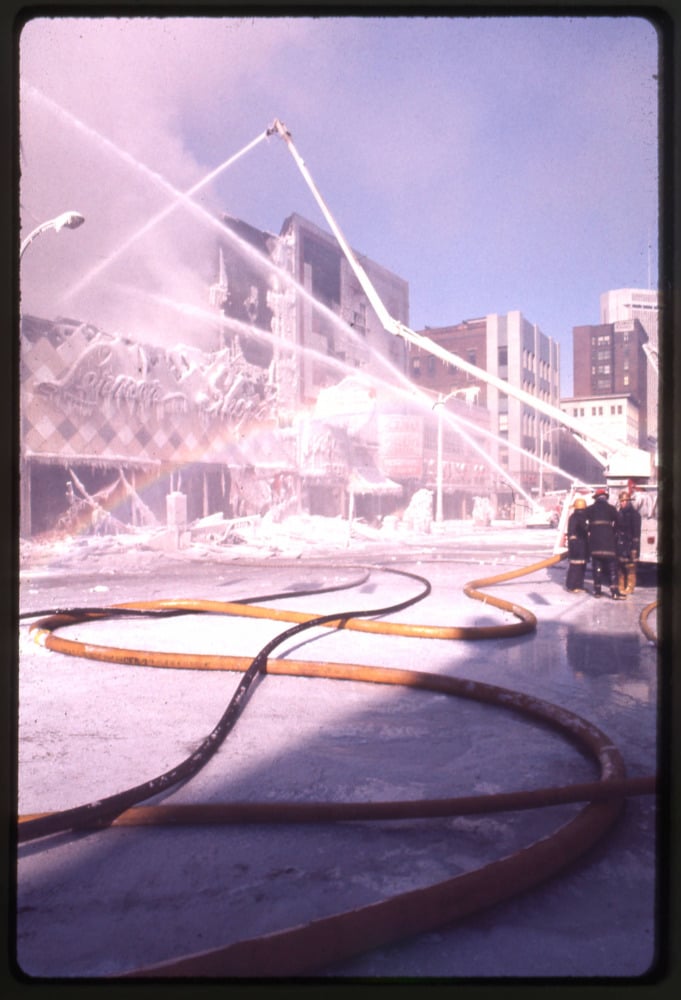
Fighting a fire is always dangerous, and that was certainly true half a century ago in freezing temperatures. Equipment stiffens. Streets turn slick. Visibility drops as steam mixes with smoke. And while it certainly led to some cinematic images to remember the fire by, the conditions were grueling at the time.
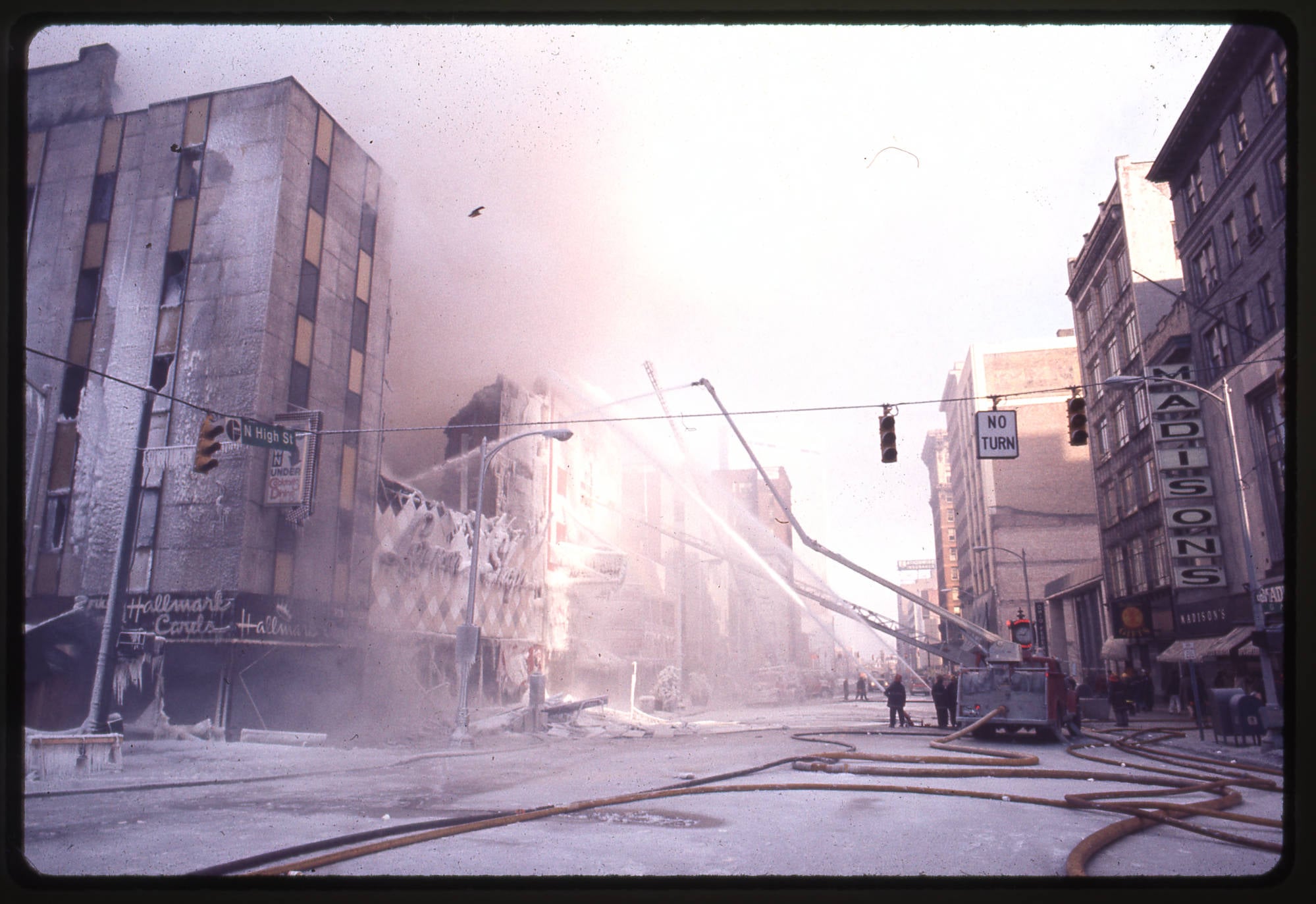
The fire marked one of the most dramatic chapters in that long story.
The corner of Gay and High had already seen nearly a century of change by 1977. In the early 1900s, it was lined with prominent commercial buildings and busy sidewalks. Parades marched past the Citizens Bank building. Streetcars rattled through the intersection. Postcards from the era show a city proud of its architecture and its energy.
READ MORE: The Past (and Present) Life of Gay & High Streets In Photos
In the years that followed, downtown Columbus experienced waves of demolition and redevelopment. Some historic structures were lost but thankfully, the High and Gay Streets Historic District would eventually earn a place on the National Register of Historic Places in 2014, recognizing the architectural and cultural importance of the area.