

You don’t need to turn your entire yard into a wildflower meadow to help Central Ohio’s bees and butterflies.
In fact, Franklin Park Conservatory and Botanical Gardens says even a single native plant on a balcony or windowsill can make a difference, and fall is a good time to get started.
The Conservatory is encouraging residents to rethink their outdoor spaces this season, from traditional lawns to small container gardens. Native plants support pollinators and local ecosystems, improve water quality and reduce stormwater runoff. Their deep root systems can also help absorb rainwater more effectively than traditional turf grass, while reducing the need for fertilizers, herbicides and pesticides.
And according to Heather Bell, sustainability coordinator at the Conservatory, fall planting comes with some advantages.
“Many native shrub and perennial plants do well if planted in the fall with a layer of mulch, because it gives their roots a headstart before the ground freezes,” Bell said.
Cooler temperatures and steady rainfall help new plants establish their roots before winter, setting them up for the next growing season.
You Don’t Have To Redo Your Entire Yard
If the thought of replacing your lawn with a sprawling native garden sounds like a lot of work, there’s good news: You can start much smaller.
“You don’t have to overhaul your whole yard to make an impact; even a single native plant in a pot on a windowsill or balcony can act as a bridge for a bee or butterfly traveling between nectar sources,” Bell said.
Residents with existing gardens can start by adding native perennials or shrubs, while those with limited outdoor space can try container gardening.
Bell also has some advice for what to do when the growing season winds down: Put away the urge to make everything look perfectly tidy.
“Once the growing season winds down, resist the urge to tidy everything up, since leaving dormant stems and seed heads standing gives insects a place to shelter through winter,” she said.
That might mean leaving some flower heads standing instead of cutting everything back in the fall. It’s a small change that can give insects shelter during the colder months.
Columbus Is Making More Room For Native Gardens
The timing also coincides with a recent change to Columbus city code that allows residents to plant pollinator gardens and native landscaping, including yards that are entirely planted with native species. The city has also removed milkweed, a critical host plant for monarch butterflies, from its noxious weeds list.
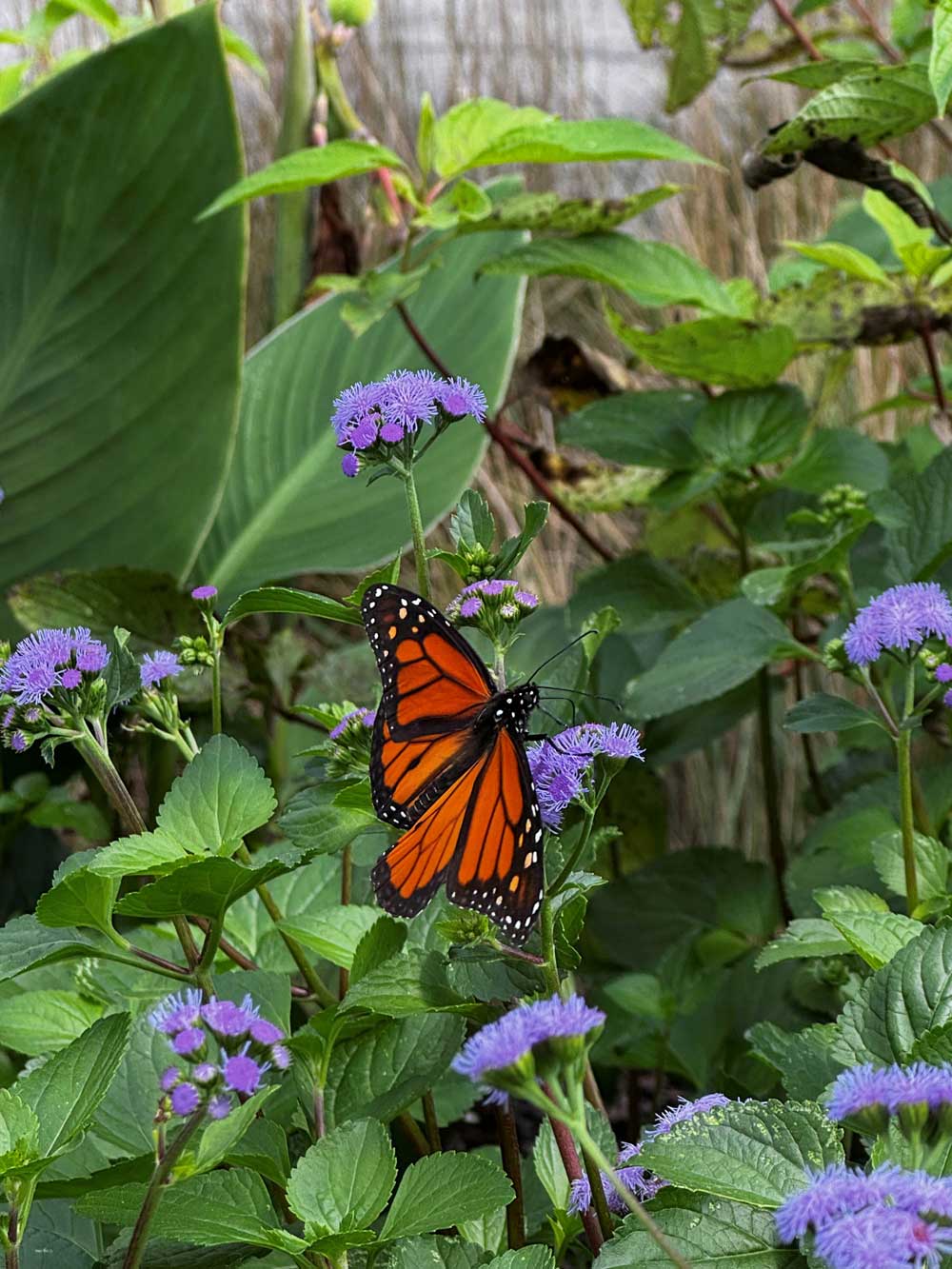
For residents who are worried that a less-manicured yard might draw complaints, Bell recommends adding a small sign explaining the planting. Young or dormant native plants can sometimes be mistaken for weeds, so a little context can help neighbors understand why they’re there.
The ordinance also opens the door to designated areas where native grasses and wildflowers are allowed to grow rather than being routinely mowed. The approach works best in areas planted with native species rather than traditional turf.
Franklin Park Conservatory Is Practicing What It Preaches
The Conservatory has been incorporating native landscaping into its own grounds, including expanded plantings in the Children’s Garden and Mallway. Its apiary, which houses beehives belonging to the Central Ohio Beekeepers Association, is maintained as a low-mow area where vegetation can grow up to 12 inches tall.
This is also the Conservatory’s third year participating in the Mayor’s Monarch Pledge alongside Columbus Recreation and Parks and the Franklin Soil & Water Conservation District. The work is particularly timely in the fall, when monarch butterflies migrate through Ohio on their way to Mexico.
For Bruce Harkey, president and CEO of Franklin Park Conservatory, the goal is to help visitors see native landscaping as something they can try themselves.
“As a botanical garden, we have a unique responsibility and opportunity to help our community understand why these small changes matter,” Harkey said. “We want our grounds to be a living example of what’s possible, so that when a visitor sees a pollinator garden here, they leave believing they can grow one of their own.”
You don’t need a sprawling garden or a complete landscaping overhaul to get started. A few native plants, a little less mowing and a willingness to leave some stems standing through winter can give local pollinators a helping hand.
