Columbus Mayor Andrew Ginther has declared an emergency in the city following Tuesday’s severe storms, giving the city some additional flexibility as crews deal with widespread damage and begin the cleanup process.
The declaration came Wednesday, after a line of severe storms moved through Columbus and much of Ohio on Tuesday morning. The storm produced winds as high as 82 mph at John Glenn Columbus International Airport, knocked out power to tens of thousands of people, and left trees, power lines and debris scattered across neighborhoods.
And while declaring an emergency might sound like a big, ominous step, it doesn’t mean Columbus is suddenly under some sort of citywide state of emergency with new restrictions for residents.
Instead, the declaration gives the city more flexibility when it comes to responding to the damage and handling the recovery. Ginther said it will help make sure Columbus has the resources it needs to address infrastructure problems and continue the response as crews assess what happened.
“We’re going to continue to respond, continue to recover, continue to rebuild,” Ginther said Wednesday.
So what happens now? A lot of cleanup, basically.
City crews are working to remove storm debris, check damaged buildings for safety issues and respond to reports from residents. The city is also continuing to accept storm-related requests through 311.
Ginther said the storm prompted one of the largest responses in the history of the Columbus Division of Fire. At one point Tuesday, every Columbus fire unit was in service responding to calls.
The mayor also visited the South Side, including Hinman Avenue, where residents were dealing with damaged homes, fallen trees and downed power lines.
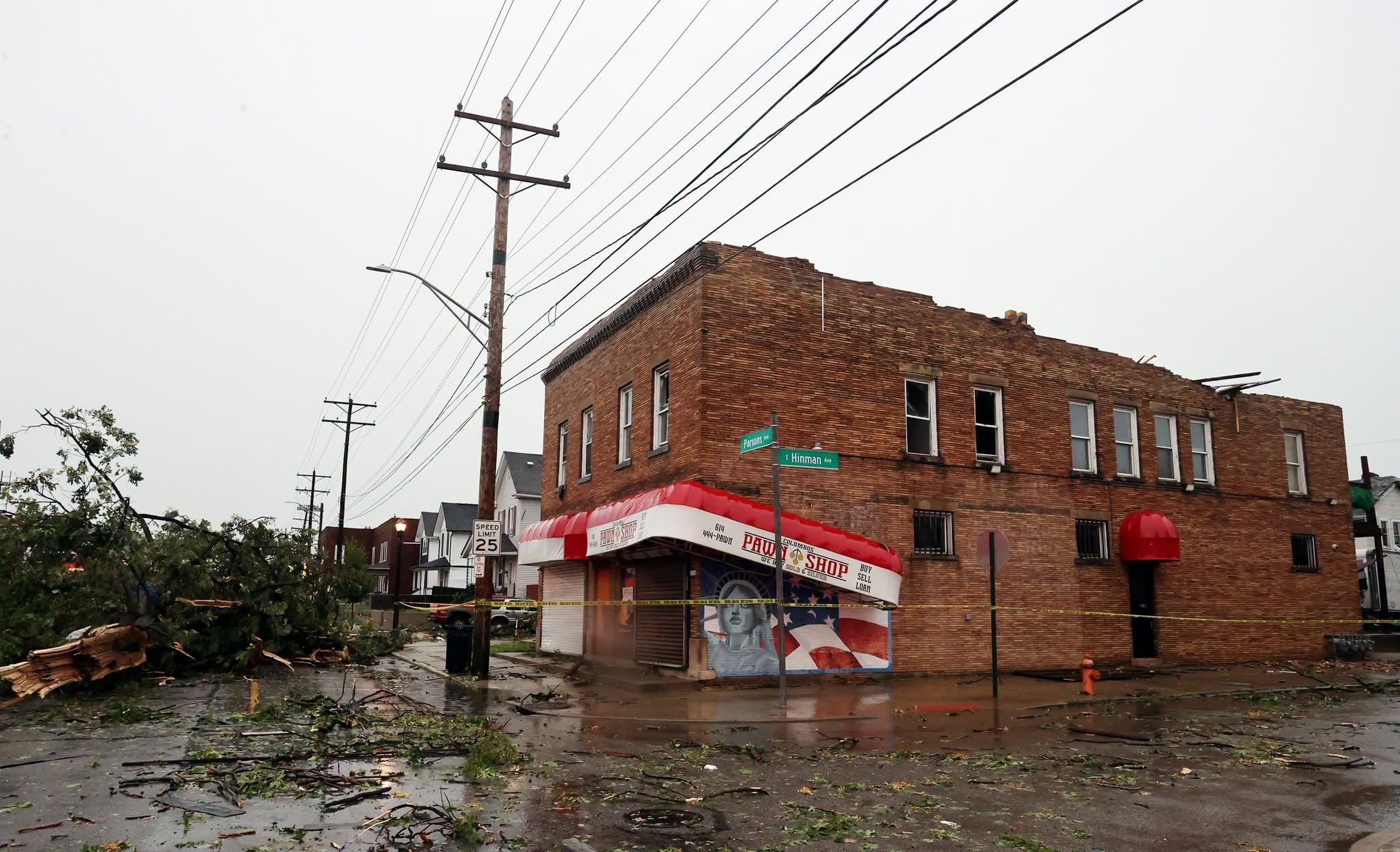
Some of the damage throughout Columbus has been significant. The Barack Community Center on the South Side lost much of its metal roof during the storm, with pieces of the roof ending up wrapped around trees nearby.
The National Weather Service is still assessing the damage, including areas of the South Side and near Clintonville where tornadoes may have touched down. Officials are calling the larger storm system a derecho, a type of long-lived windstorm associated with widespread straight-line winds.
Despite all that damage, Columbus avoided any reported fatalities or serious injuries from the storm.
“Zero fatalities, zero transports to ERs for injury, nothing short of miraculous for this type of storm and 82 mile per hour winds at John Glenn International Airport,” Ginther said.
Power restoration is also still underway. AEP Ohio said approximately 110,000 customers in central Ohio were without power at the height of the outages. That number had fallen to around 60,000 by Wednesday as crews worked to restore service.
For residents, the biggest takeaway from the emergency declaration is that the city is still very much in response-and-cleanup mode. The declaration gives Columbus additional tools and resources to deal with the aftermath while crews figure out the full extent of the damage.
And considering how much of the city was affected in a matter of hours, that cleanup is probably going to take a little while.