At some point, every city pauses to imagine who it’s going to become.
For Columbus, that moment came in the early 1960s, when architects, planners, and local experts were asked a deceptively simple question: What will Columbus look like in the future?
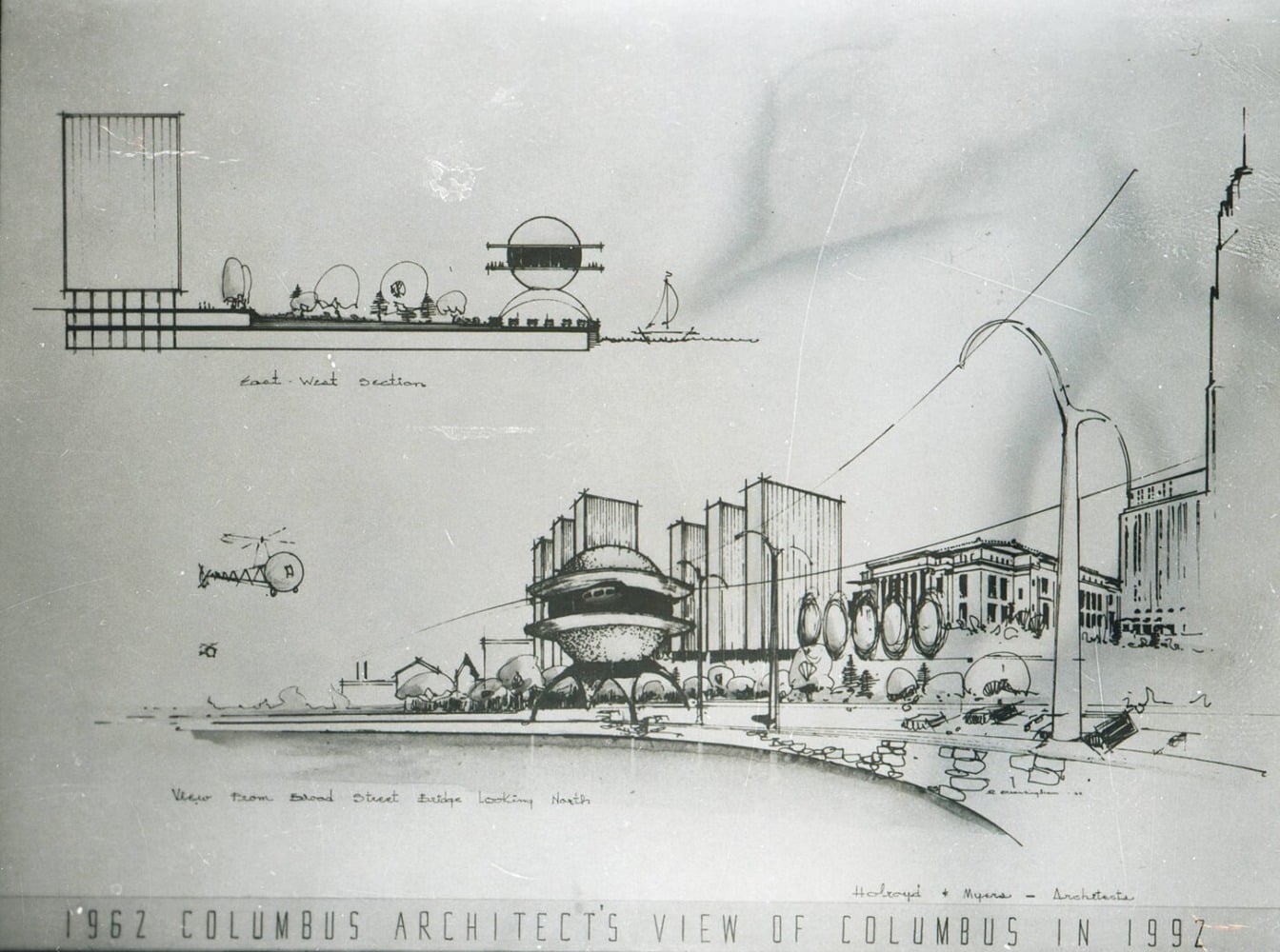
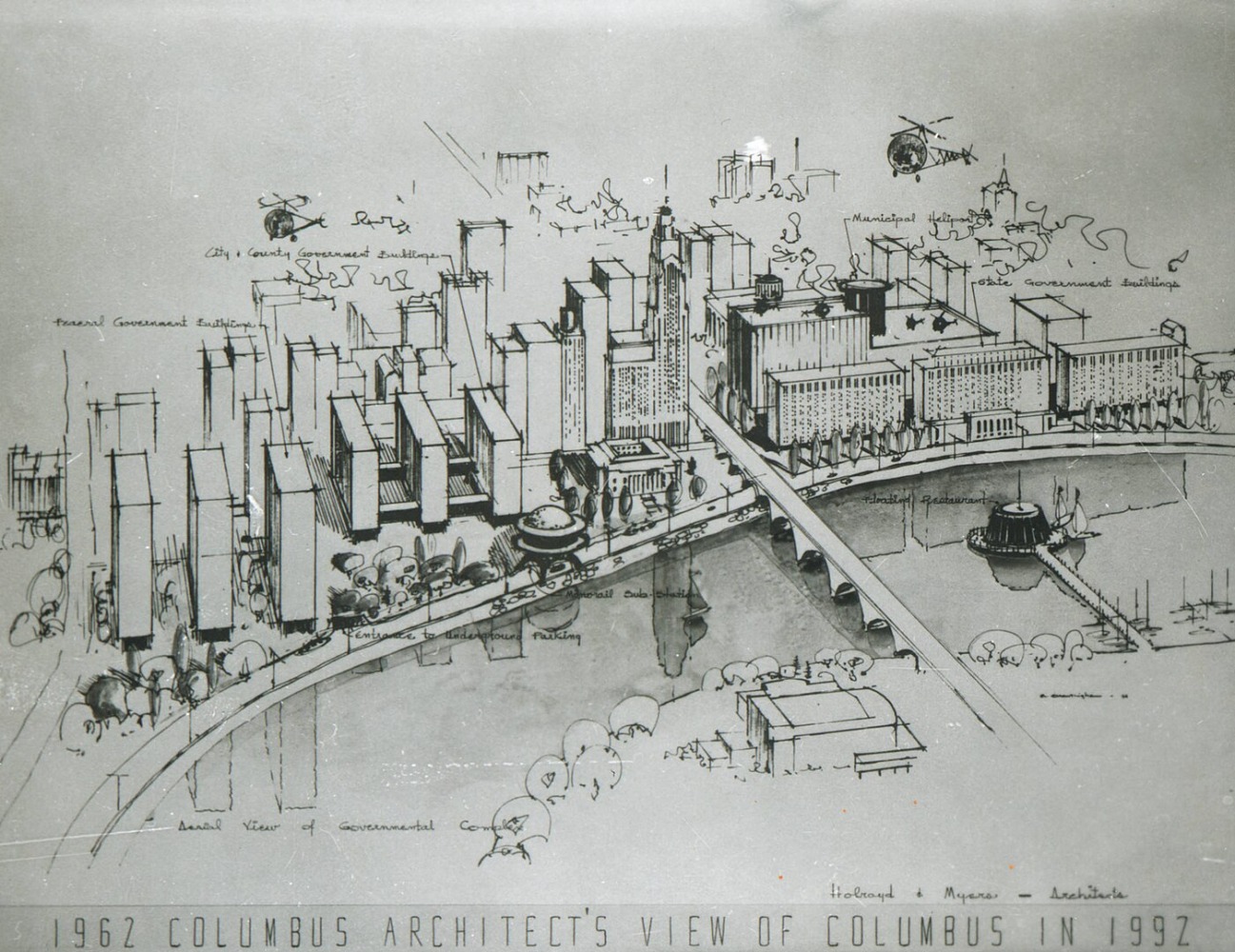
Their answers, published in the Columbus Dispatch Magazine, came with bold predictions and even bolder illustrations. With floating restaurants on the Scioto, elevated roadways held up by cables, and futuristic downtown skylines, it was certainly an ambitious view of what was to come.
While the drawings certainly had sci-fi elements, they were serious attempts to picture Columbus decades ahead, created during a time when optimism about technology and urban growth ran high.
Today, those drawings live on, offering a fascinating glimpse into how Columbus once imagined its tomorrow.
A City Designed for the Future
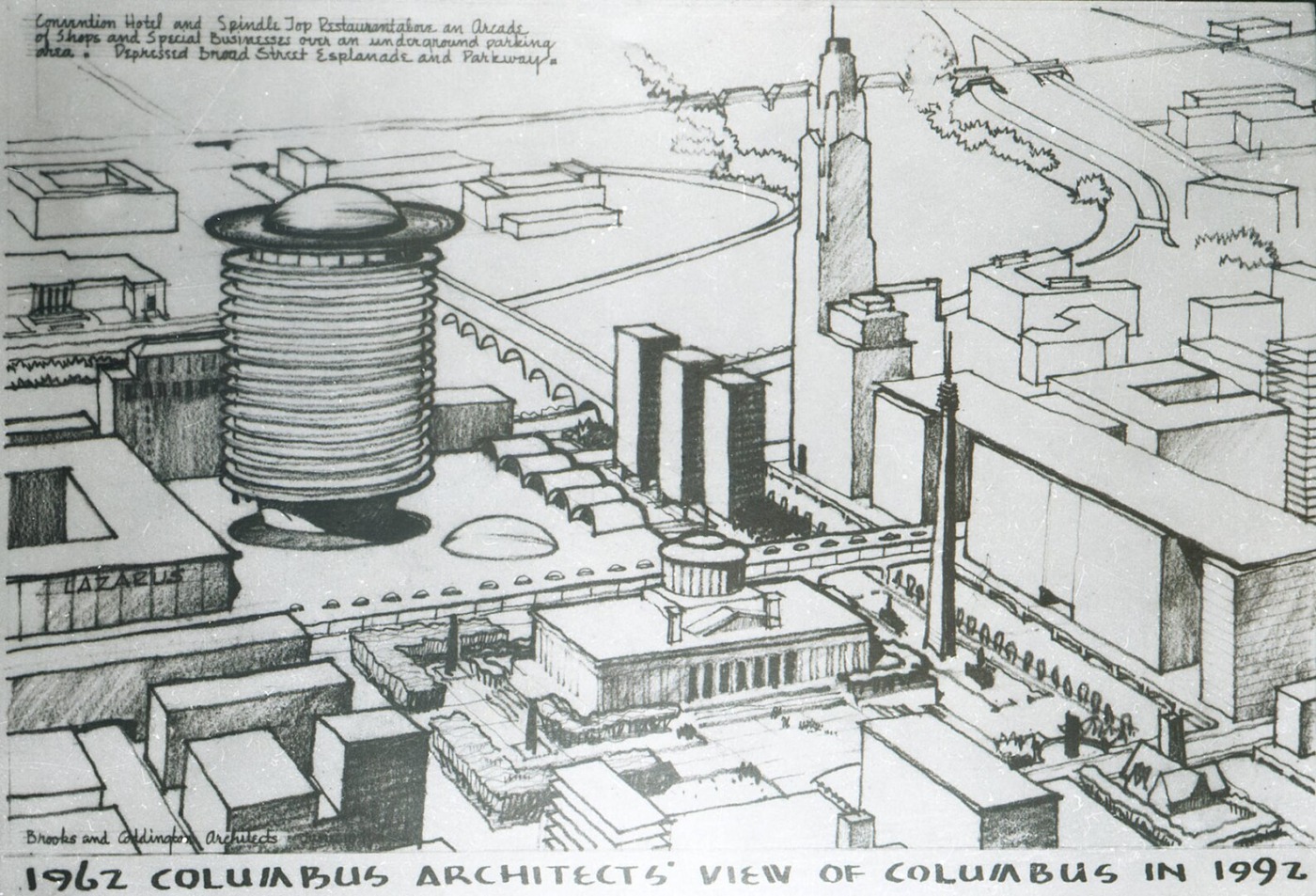
The original article, titled “Columbus Looks Ahead,” debuted during the city’s sesquicentennial in 1962. Contributors were asked to predict how Columbus might change over the next 50 years and beyond, with some visions stretching as far as the year 1992 and others imagining life around the turn of the millennium.
Architectural firms like Tibbals-Crumley-Musson, Holroyd and Myers, and Brooks and Coddington contributed drawings that showed a transformed city. Their Columbus featured pedestrian-focused downtown spaces, futuristic entertainment venues, and sweeping views of the Scioto River lined with floating structures and modernist designs.
Looking at the images now, they feel both charming and ambitious, capturing a moment when the future felt limitless.
The Predictions That Actually Came True
While some of the illustrations leaned heavily into fantasy, a surprising number of the predictions landed closer to reality than their creators probably realized. The article anticipated:
- Credit cards and magnetically coded payments replacing cash
- Pre-cooked and frozen meals becoming part of everyday life
- Personalized television programming without traditional commercials
- Expanded underground parking
- Pedestrian-friendly areas in the downtown core
Today, these ideas feel almost ordinary, which might be the biggest sign of how accurate they were.
The Ideas We’re Still Waiting On
Other predictions haven’t quite made the leap from page to pavement. Among them:
- Anti-gravity transportation, floating roads, and buildings
- Cargo and passenger rocket ships
- Clothes cleaned in the closet by sound waves
- Mind-reading technology via electronic devices
- A Columbus population of 1.5 million residents
While the city has grown significantly, it hasn’t quite met that projected population. And for now, at least, gravity remains firmly in place along the Scioto.
What These Visions Say About Columbus
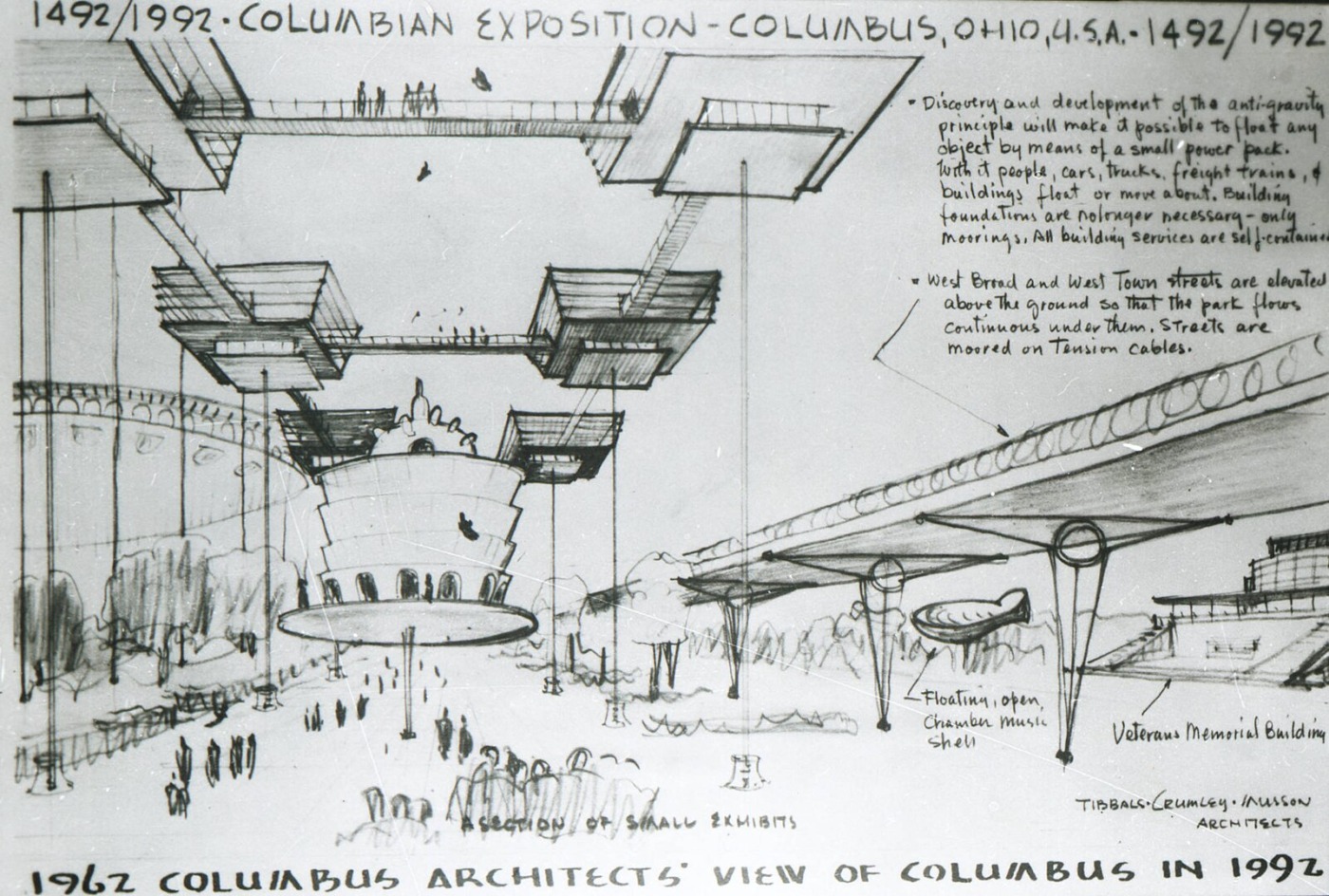
More than anything, these drawings reveal how Columbus saw itself in the mid-20th century. The focus wasn’t just on spectacle, but on efficiency, convenience, and quality of life. Traffic congestion, downtown vitality, and access to culture were already top of mind.
Even when the predictions missed the mark, they reflected a city thinking seriously about growth and change. Many of the questions raised then are still being debated today, just with different tools and timelines.
Looking Forward, Again
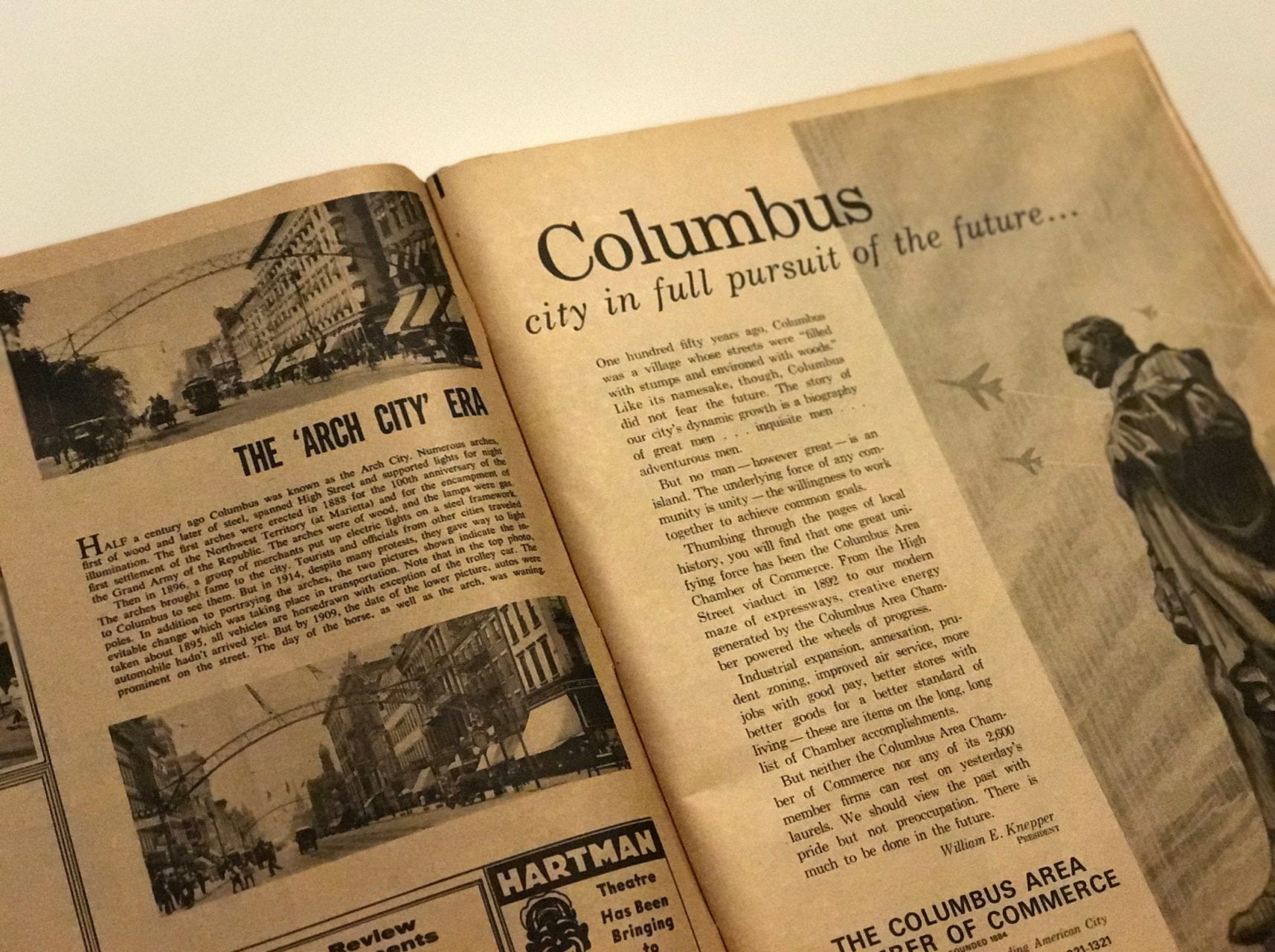
Columbus has spent the decades since those illustrations were drawn quietly reshaping itself. Some changes happened faster than expected. Others arrived in subtler ways. And plenty of ideas are still evolving.
As the original article put it, “Anything Columbus has done will be overshadowed spectacularly by what is to come.” Whether that future includes floating buildings or not remains to be seen.
If you’d like to dive deeper into the original magazine that sparked these visions, we previously shared the full story behind how we tracked down the issue and explored its pages after finding it on eBay. You can check that out here.
For now, these drawings serve as a reminder that imagining the future has always been part of Columbus’s story, and it still is.